 En
En  中文简体
中文简体 西班牙语
西班牙语

Article Directory
- 1 What Is Copperplate Paper Release Paper?
- 2 Copperplate Paper as a Release Liner Substrate: Properties and Advantages
- 3 Silicone Release Coating: Types and Release Force Levels
- 4 Single-Side vs. Double-Side Silicone Coating
- 5 Key Application Areas for Copperplate Paper Release Paper
- 6 Copperplate Paper Release Paper vs. Other Release Liner Substrates
- 7 Specifying and Sourcing Copperplate Paper Release Paper: What to Check
What Is Copperplate Paper Release Paper?
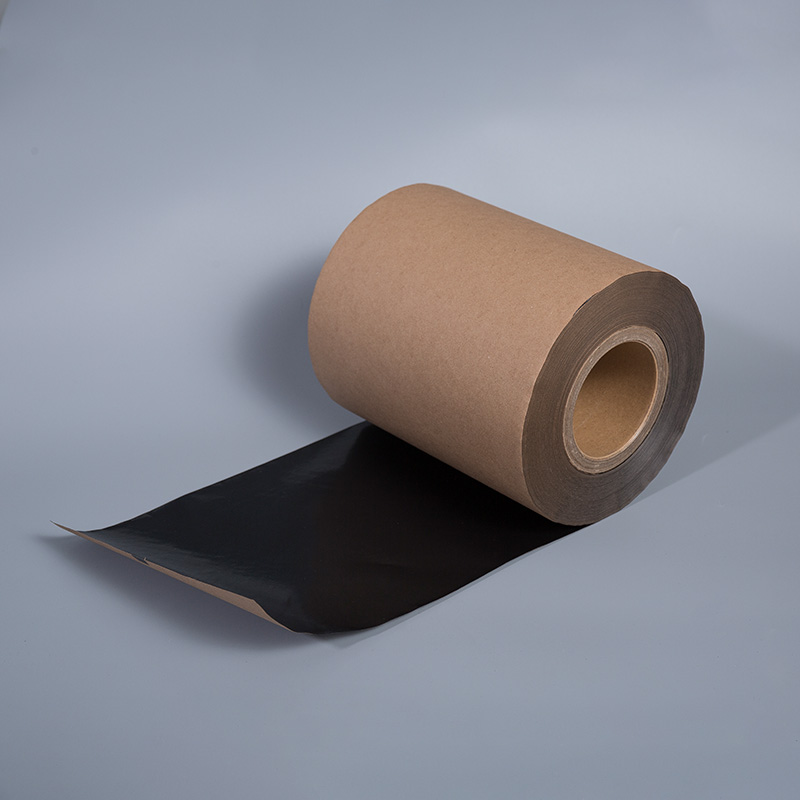
Copperplate paper release paper is a silicone-coated release liner produced on a glassine or coated paper base — most commonly cast-coated or clay-coated copperplate paper — that provides a smooth, low-adhesion surface for pressure-sensitive adhesives, self-adhesive labels, films, and tapes. The term "copperplate paper" refers to the substrate: a high-brightness, calendered paper with a smooth clay-coated surface traditionally associated with printing applications, which also makes it an excellent carrier for uniform silicone release coatings. When used as a release liner, this substrate is coated on one or both sides with thermally cured or UV-cured silicone, creating a non-stick interface that protects the adhesive layer during storage and transport and releases cleanly at the point of application.
Release liners are an invisible but essential component of the global adhesive products supply chain. The worldwide release liner market exceeded $10 billion USD in recent years, with paper-based liners — including copperplate and glassine variants — accounting for approximately 60% of total volume. Applications span self-adhesive labels, medical wound dressings, industrial tapes, graphic films, food packaging, and composite manufacturing.
Copperplate Paper as a Release Liner Substrate: Properties and Advantages
The choice of substrate determines the mechanical, optical, and processing performance of the finished release liner. Copperplate paper — also called cast-coated paper or art paper in different markets — offers several properties that make it well suited for release liner applications:
- Surface smoothness: The clay-coated surface of copperplate paper provides a Bekk smoothness of 500–2,000 seconds and surface roughness Ra below 1 µm, enabling highly uniform silicone coating weight and minimizing pinholes that could allow adhesive bleed-through
- Dimensional stability: The dense clay coating and well-sized base paper resist moisture-induced expansion and contraction, maintaining flatness and registration accuracy through converting and die-cutting operations
- High brightness and opacity: Brightness values of 85–92% ISO make copperplate release liners suitable for applications where the liner serves a secondary display or print function, such as promotional label backs
- Caliper consistency: Tight basis weight and thickness tolerances (typically ±2–3%) ensure consistent laminate construction, critical for automated label dispensing and high-speed application equipment
- Cost-effectiveness: Copperplate paper offers superior smoothness at a lower cost than film substrates such as PET or BOPP, making it the preferred choice for high-volume label and tape applications where film-level moisture resistance is not required
Common basis weights for copperplate release paper range from 60 gsm to 140 gsm, with 80 gsm and 100 gsm being the most widely specified grades in self-adhesive label stock. Heavier grades (120–140 gsm) are used where liner rigidity is important for die-cutting precision or for applications involving manual peel-and-apply without mechanical dispensing.
Silicone Release Coating: Types and Release Force Levels
The silicone coating is what converts a copperplate paper substrate into a functional release liner. Silicone release coatings work by presenting a low surface energy interface (18–22 mN/m) to the adhesive, preventing permanent bond formation while allowing clean, consistent peeling.
Thermal Cure (Solventless) Silicone
Platinum-catalyzed addition-cure silicone systems are the industry standard for paper release liners. Applied via multi-roll coating at 0.8–1.5 g/m² and cured in a thermal oven at 120–160 °C, solventless silicone systems offer excellent anchorage to coated paper surfaces, low coating weight variability (±0.1 g/m²), and no solvent emissions. Curing speed of 0.3–1.0 seconds at line speeds of 200–600 m/min makes thermal cure silicone commercially efficient for high-volume production.
UV-Cure Silicone
UV-curable cationic silicone systems cure via photoinitiator activation under UV lamps, enabling use on heat-sensitive substrates and achieving very high line speeds. UV cure is used on some coated paper liners where the drying oven footprint is a constraint, though thermal cure remains dominant for copperplate paper applications due to its lower equipment cost and excellent compatibility with paper substrates.
Release Force Grades
Release force — the peel force required to separate the liner from the adhesive — is engineered by adjusting silicone formulation, cure density, and coating weight. Standard release force classifications for copperplate paper release liners:
| Release Grade | Typical Peel Force (cN/cm) | Typical Application |
|---|---|---|
| Ultra-light release | 2–5 | High-speed automatic label dispensing, repositionable adhesives |
| Light release | 5–15 | Standard self-adhesive labels, stickers, protective films |
| Medium release | 15–40 | Hot-melt adhesive tapes, foam tapes, double-coated tapes |
| Tight / controlled release | 40–150 | Aggressive adhesives, transfer tapes, die-cut parts requiring precise liner retention |
Differential release — where one side of a double-sided liner has significantly lower release force than the other — is essential for double-coated tape constructions, ensuring the liner peels from the intended side first during application. Differential ratios of 3:1 to 10:1 (light side to tight side) are standard for two-sided copperplate release paper used in tape manufacturing.
Single-Side vs. Double-Side Silicone Coating
Copperplate paper release liners are supplied in single-sided and double-sided configurations:
- Single-sided (1S) release paper: Silicone on one face only; the back face may be uncoated, printed, or treated with a barrier coating. Used as the carrier liner in self-adhesive label constructions, protective films, and single-coated tapes where only one adhesive layer contacts the liner.
- Double-sided (2S) release paper: Silicone on both faces, typically with different release force values on each side. Used as the interleaf liner in double-coated tapes, foam tape rolls, and transfer adhesive constructions. The differential release ensures the tape unwinds correctly and the user can peel the desired liner face first during bonding.
For roll-form tape products, the back side of the liner — which contacts the adhesive on the next winding of the roll — must also have an appropriate release coating, even in nominally single-use constructions. Failure to control back-side release in wound rolls leads to blocking, telescoping, or adhesive transfer defects.
Key Application Areas for Copperplate Paper Release Paper
Self-Adhesive Labels and Stickers
The largest single end-use market for copperplate paper release liners is self-adhesive label stock — the laminate construction consisting of a face material (paper, film, or foil), a pressure-sensitive adhesive layer, and the release liner. The smoothness of the copperplate liner directly influences adhesive coat weight uniformity, which in turn affects consistent label peel performance across millions of labels in automated dispensing environments. Supermarket price labels, logistics barcodes, pharmaceutical labels, and wine labels all depend on high-quality release liner for reliable machine application at speeds of 10,000–60,000 labels per hour.
Industrial and Specialty Tapes
Double-coated foam tapes, transfer adhesive tapes, and die-cut gasket materials use copperplate paper release liners as the carrier during manufacturing and as the protective interleaf in finished roll or sheet form. The dimensional stability of copperplate paper is particularly valued in precision die-cutting, where liner deformation during cutting leads to registration errors and wasted material.
Medical and Hygiene Products
Wound care dressings, surgical drapes, ostomy appliances, and transdermal drug delivery patches all use release liners to protect the skin-contact adhesive layer. Medical-grade copperplate paper release liners must meet stringent requirements for silicone migration (typically <1 µg/cm²), absence of harmful extractables, and consistent release force across the product shelf life — often 2–5 years.
Graphic Arts and Digital Printing
Large-format graphic films for vehicle wraps, window graphics, and floor decals use release liners during die-cutting, storage, and application. In this segment, copperplate paper liners with printable back surfaces serve a dual function — the liner back can carry application instructions, product information, or brand content, adding value without increasing material cost.
Copperplate Paper Release Paper vs. Other Release Liner Substrates
Copperplate paper competes with several other substrate types in the release liner market. Selection depends on the specific performance requirements of the end application:
- Glassine paper: A supercalendered, semi-transparent paper offering slightly higher smoothness than standard copperplate grades and excellent conformability. Preferred for label stock in Europe; more susceptible to moisture-induced curl than clay-coated copperplate paper
- Polyester (PET) film: Superior dimensional stability, moisture resistance, and temperature resistance (up to 150–200 °C); used where paper liners would deform or where very low caliper variation is required. Significantly higher cost and non-recyclable in standard paper streams
- Polyethylene-coated kraft (PCK): A paper carrier with a polyethylene coating that acts as a barrier and silicone anchor coat. Higher moisture resistance than uncoated paper; heavier and less smooth than copperplate; widely used in North America for label stock and outdoor applications
- Biaxially oriented polypropylene (BOPP) film: Lightweight, excellent clarity, moisture resistant; used for transparent liner applications in cosmetics and electronics, but higher cost than paper alternatives
Copperplate paper occupies the optimal cost-performance position for indoor label and tape applications — providing surface quality close to film substrates at paper cost, with the additional advantage of recyclability and compatibility with paper waste streams, an increasingly important factor as brand owners and converters face pressure to reduce plastic liner waste.
Specifying and Sourcing Copperplate Paper Release Paper: What to Check
When evaluating or sourcing copperplate paper release paper, the following parameters should be confirmed against application requirements:
- Basis weight (gsm): Must suit the rigidity and caliper requirements of the laminate construction and the converting equipment being used
- Silicone coating weight and uniformity: Specified in g/m²; measured by X-ray fluorescence (XRF) or gravimetric methods; coat weight variation should be within ±0.15 g/m²
- Release force value and aging stability: Initial release force and the force after accelerated aging (e.g., 70 °C / 24 h with adhesive in contact) should both fall within specification — release force typically increases 20–50% on aging and must remain within the window for reliable application
- Subsequent adhesion retention: The adhesive should retain ≥90% of its original tack after being in contact with the silicone release surface — low-quality or over-cured silicone can migrate into the adhesive layer, reducing bond strength in the final application
- Moisture content and flatness: Paper release liners supplied at 4–6% moisture content and conditioned to the converting environment minimize curl and cockling problems during die-cutting, laminating, and printing
- Compliance certifications: Food contact (FDA 21 CFR, EU 10/2011), medical device (ISO 11607), or toy safety (EN 71) compliance where required by the end application