 En
En  中文简体
中文简体 西班牙语
西班牙语

Article Directory
- 1 Coated art release paper rolls and copperplate paper release paper differ at the base-paper level
- 2 Release force consistency decides the coated art vs copperplate label liner comparison
- 3 Die-cutting and dimensional stability separate workhorses from precision liners
- 4 Cost per converted label, not cost per roll, decides the real price gap
- 5 Where coated art release paper rolls and copperplate paper release paper each earn their place
- 6 A practical selection checklist for label liner procurement
- 7 Frequently asked questions about release paper for label liners
A label converter running 40,000 linear meters of permanent acrylic adhesive labels recently tested two liner candidates side by side on the same die-cutting line: coated art release paper rolls and copperplate paper release paper. The copperplate liner held release force within +/-2 g/in from core to surface, while the coated art roll drifted by +/-6 g/in after one humidity swing. That gap decided whether the automatic labeling line ran at 120 m/min or dropped to 80 m/min - and it is exactly the kind of material comparison for label liners a buyer should run before committing to a roll.
Both materials are silicone-coated paper liners, but their base-paper construction changes printing, die-cutting, and dispensing behavior. This comparison covers release force, dimensional stability, conversion cost, and application fit.
Coated art release paper rolls and copperplate paper release paper differ at the base-paper level
The base paper and coating architecture decide most liner properties before silicone is applied, and that is exactly where the two materials separate.
Coated art release paper starts from a wood-free base paper with a single pigment coating of calcium carbonate and latex, lightly calendered. Copperplate paper release paper uses the same base stock but receives a heavier, often double-side coating followed by super-calendering, producing a denser, glossier surface.
That density is decisive: silicone emulsion must sit on the coating, not sink into the fiber. A closed copperplate surface reaches the target release force with less silicone and reduces adhesive strike-through on low-viscosity adhesives.
Release liner definition
A release liner is a paper or film carrier with a silicone coating on one side that protects the adhesive face of a label or tape until application. The liner must release cleanly, without adhesive transfer, fiber tear, or changes in tack.
| Property | Coated art release paper | Copperplate paper release paper |
| Coating pass | Single pigment coat, light calendering | Heavier or double coat, super-calendered |
| Surface density | Moderate, slightly porous | Dense, closed, high gloss |
| Silicone holdout | Moderate; higher coat weight required | High; uniform release with less silicone |
| Relative cost | Lower per square meter | Premium per square meter |
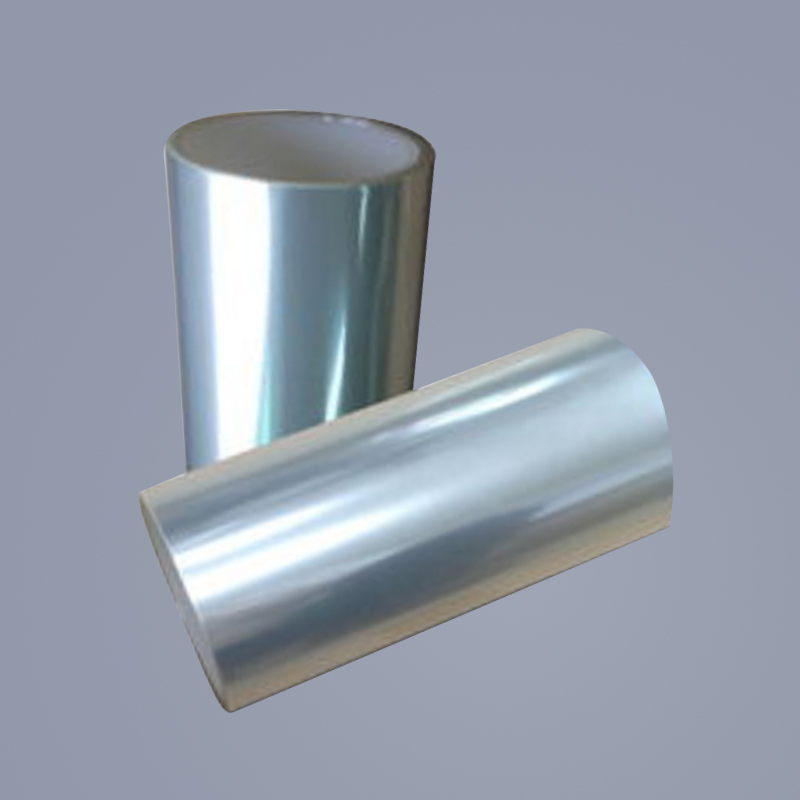
Copperplate paper release paper is supplied in gloss and matte finishes, with release-force grades matched to label liner runs.
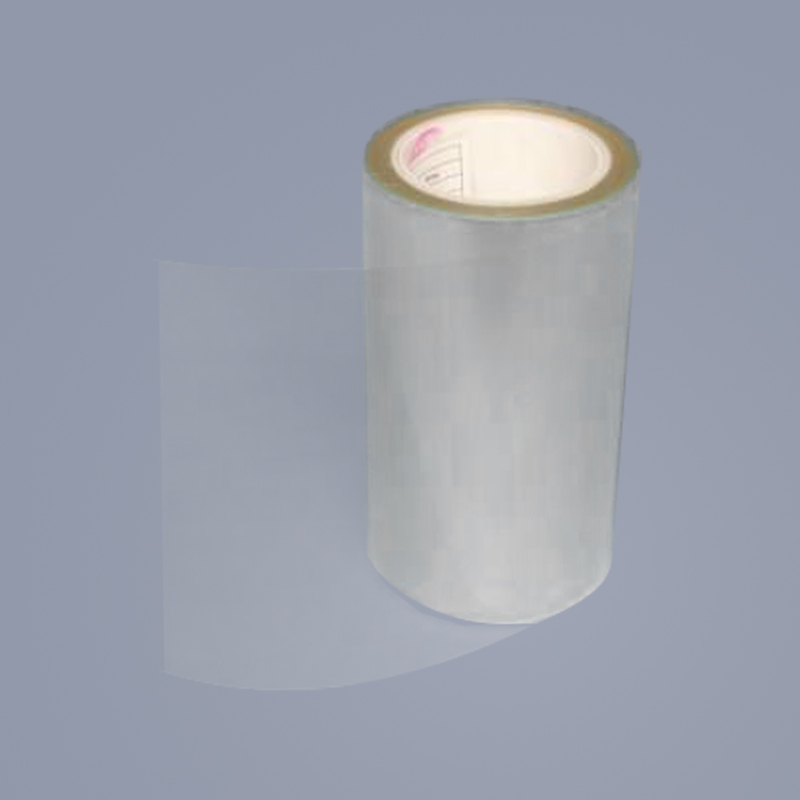 Gloss and Matte Copperplate Paper Release Paper from Anhui HengboThe release-force bandwidth is more critical than the absolute peel value for automatic labeling, and this copperplate paper liner provides a narrow, repeatable band. It suits printing, die-cutting, and adhesive labeling with available widths of 500–1600 mm.View Product →
Release force consistency decides the coated art vs copperplate label liner comparison
For automatic labeling, the release-force bandwidth matters more than the absolute peel value, and copperplate paper release paper delivers the narrower, more repeatable band.
Release force is measured in grams per inch at a defined peel angle and speed, commonly a 180-degree peel at 300 mm/min under FINAT or TAPPI methods. Label adhesives are matched to three ranges: light 5-15 g/in, medium 15-30 g/in, and tight above 30 g/in for low-tack or transfer adhesives.
Coated art release paper can hit these ranges, but its porous coating absorbs silicone unevenly. Converters measuring release at roll start, middle, and end of coated art rolls often see drift of +/-5-8 g/in. Copperplate paper, with its closed surface, holds within +/-2-3 g/in across the same length.
Target release-force band for high-speed label application: +/-3 g/in or tighter across the full roll
Consistent release force from roll to roll is the first property a buyer should verify on a sample roll before production.
Die-cutting and dimensional stability separate workhorses from precision liners
Paper liners fail in conversion when caliper variation produces kiss-cut depth errors and when fiber swelling causes curl, so stiffness and moisture response are the second screen in a material comparison for label liners.
Copperplate paper's double coating levels caliper variation; typical tolerance is +/-3-5%, versus +/-5-8% for single-coated art paper. The denser coating also slows moisture absorption: at 80% relative humidity, copperplate rolls gain roughly half the moisture of coated art rolls, so they stay flatter with less edge wave.
Three conversion behaviors change immediately:
- Kiss-cut depth stays constant across the web because caliper is uniform, reducing missed cuts and liner strikes.
- Matrix stripping improves because a stiffer liner produces a clean matrix break instead of paper tear.
- High-speed dispensing is steadier because the liner feeds flat through the peel plate.
Coated art release paper
Moderate stiffness, higher moisture pickup, wider caliper tolerance. Suitable for medium-speed die-cutting with standard adhesives; matrix tear risk rises above 100 m/min.
Copperplate paper release paper
High stiffness, low moisture pickup, tight caliper control. Clean matrix stripping at 120 m/min and above; stays flat in humid converter storage.
For applications where even paper-liner curl is unacceptable, such as film face stocks or inline printing with tight registration, the next step up is a film liner. PET release film removes moisture response entirely and resists tearing during matrix stripping.
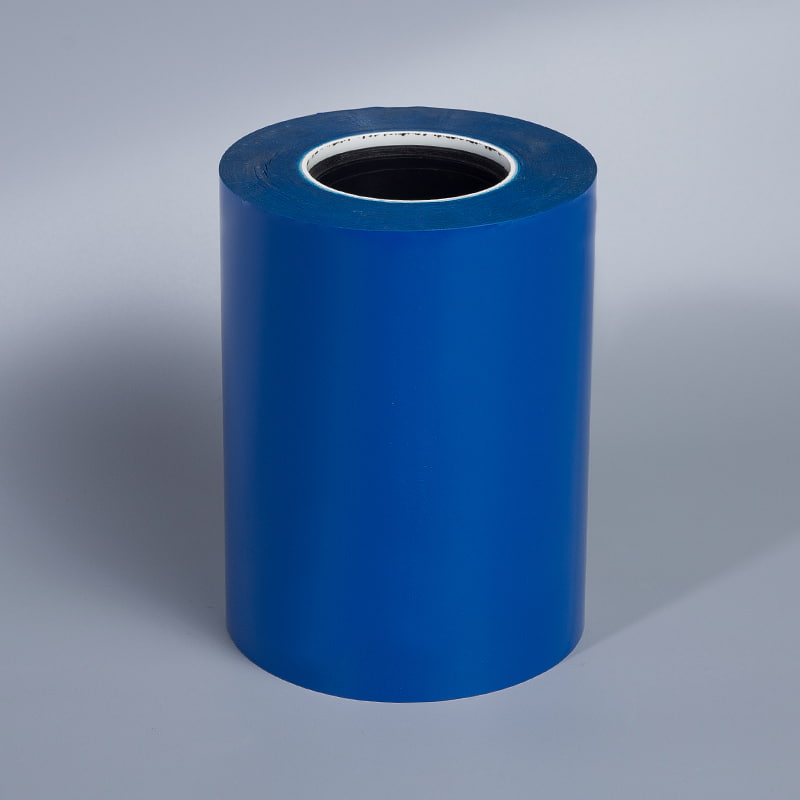 PET Release Printed Films with Single or Double-Sided Silicone CoatingWhere even paper-liner curl is unacceptable, this film liner removes moisture response and resists tearing during matrix stripping. It offers high flatness, uniform silicone coating, stable release, and ranges from 12 to 100 microns in thickness.View Product →
Cost per converted label, not cost per roll, decides the real price gap
The cheaper roll is rarely the cheaper liner once silicone consumption, waste, and downtime are counted, and the two paper materials often converge on total conversion cost.
Coated art release paper carries a lower base price. That advantage shrinks in conversion: the porous coating forces a higher silicone coat weight, wider release drift produces rejected rolls, and slower line speed raises labor and overhead. Copperplate paper costs more at purchase but consumes less silicone, stores better, and sustains higher press speeds.
The chart below models material cost, silicone over-coating, waste, and downtime for a 1,000-square-meter run at medium-tack adhesive.
Illustrative values from label converter cost modeling; actual figures depend on adhesive system, press speed, and waste rate.
In this model the two paper liners land within 2% of each other. Coated art wins when runs are short, humidity is controlled, and line speed is secondary. Copperplate wins on long runs, high-speed labeling, and any job where a stoppage costs more than the liner price difference.
Where coated art release paper rolls and copperplate paper release paper each earn their place
Coated art release paper rolls fit general labeling and short runs; copperplate paper release paper fits precision, high-speed, and demanding adhesive systems, with film liners reserved for the most demanding jobs.
Coated art liners suit price tags, shipping labels, stationery, and food packaging where adhesive tack is moderate and line speed stays below roughly 100 m/min. Copperplate liners pay off on thermal transfer labels, electronics labels, automotive nameplates, medical device labels, and high-gloss printed labels applied at high speed.
For liner grades with specific optical needs, a high-transparency liner with chemical stability is where Gracin release paper comes in, bridging paper handling and film-like optics.
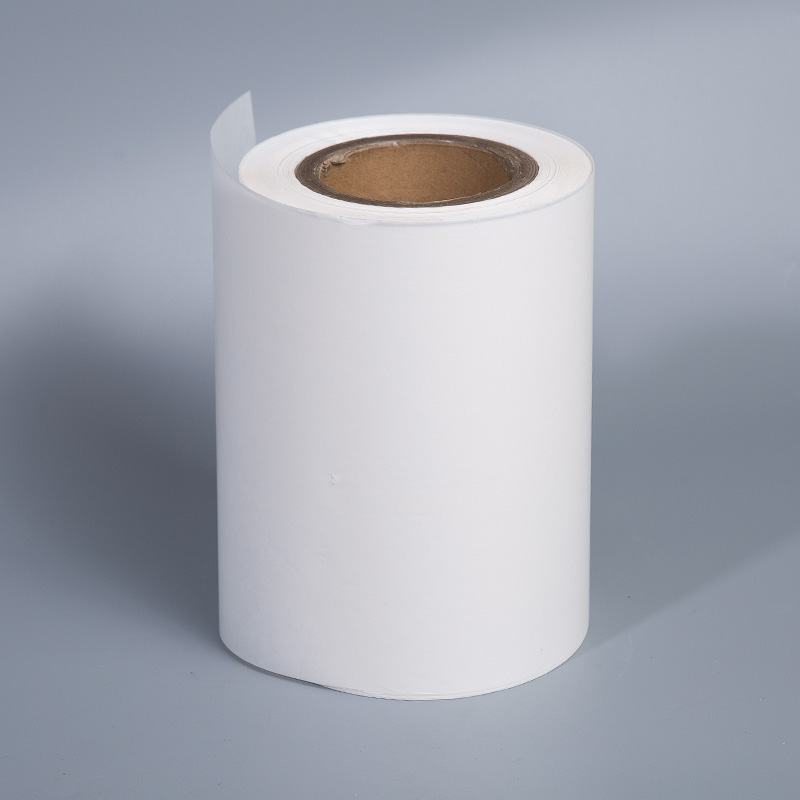 Glassine Release Paper with High Transparency and Uniform Silicone CoatingWhen face stocks are transparent, thin, or go into humid environments, this glassine liner eliminates paper failure modes and extends die-cutting tool life. It provides smoothness, stiffness, and good dimensional stability in 40–120 gsm weights.View Product →
| Job type | Recommended liner | Reason |
| Price and shipping labels | Coated art release paper | Lowest cost, adequate release |
| High-speed automatic labeling | Copperplate paper release paper | Tight release band, stiff feeding |
| Thermal transfer and variable print | Copperplate paper release paper | Smooth surface, consistent print depth |
| Transparent no-label film labels | PET release film | Clarity, no paper curl |
| Chemically exposed label stock | Gracin release paper | High transparency, chemical stability |
When the face stock is transparent, thin, or routed into a humid environment, PET release film removes the paper failure modes entirely and extends die-cutting tool life.
A practical selection checklist for label liner procurement
When you compare coated art release paper rolls against copperplate paper release paper, verify release-force tolerance, caliper control, humidity response, and print surface in that order before you compare price.
- Confirm the release-force specification. State the target value, tolerance, and test method; request start-middle-end release data for every delivered roll.
- Measure caliper across the web at six points. Uniform caliper keeps kiss-cut depth constant and prevents liner strikes during die-cutting.
- Test humidity response. Condition samples at 60% and 80% relative humidity and check curl, edge wave, and release-force shift.
- Run a matrix-stripping trial at target line speed. A 15-minute run at 120 m/min reveals fiber tear and adhesive deposit.
- Verify printability if the liner face is printed. Smoothness and toner adhesion matter for variable-data printing.
- Compare converted cost, not roll price. Include silicone over-coating, waste, rework, and downtime in the square-meter calculation.
Order 5,000 meters of each candidate and run them on the actual line. A 60-minute trial costs far less than a full roll that fails during automatic labeling.
Suppliers that manufacture both coated paper and copperplate paper release paper, such as Anhui Hengbo New Material Co., Ltd., make it easier to qualify a second liner without changing the supplier ecosystem.
Frequently asked questions about release paper for label liners
Which release paper resists humidity better for label liner storage?
Copperplate paper release paper resists humidity better because the heavier coating and super-calendering close the pore structure. At high relative humidity, copperplate rolls gain less moisture, stay flatter, and hold their release force across a wider storage window.
Can coated art release paper rolls run on high-speed automatic labeling lines?
Yes, but with limits. Coated art release paper handles medium-tack adhesives and line speeds up to roughly 100 m/min under controlled humidity. Above that, release drift and matrix tearing increase stoppage risk; copperplate paper release paper is the more predictable liner for sustained high-speed output.
What release force should a label liner have?
The correct release force depends on the adhesive and the application speed. Light-release liners run between 5 and 15 g/in for cold-temperature or low-tack adhesives, medium-release between 15 and 30 g/in for most permanent labels, and tight-release above 30 g/in for transfer adhesives. The liner must release cleanly without pulling the label away from the applicator.
Is copperplate paper release paper always more expensive than coated art release paper?
At the roll level, yes. At the converted-label level, no: lower silicone consumption, a tighter release band, and reduced waste offset the higher base price. In the model above, total cost per 1,000 m2 differed by only 2% between the two paper liner types.