 En
En  中文简体
中文简体 西班牙语
西班牙语

Article Directory
PET release film rarely gets top billing on a bill of materials, yet it decides whether a die-cutting line runs clean, whether a label peels without chatter, and whether a roll of tape unwinds without blocking. The moment a converter specifies a liner, one question arrives almost immediately: single-sided or double-sided?
The answer is not simply one coated face or two. Moving from a single silicone surface to two changes the chemistry budget, the curing window, the winding tension, and the two numbers your production team lives by: silicone coating uniformity and release force. This guide explains how the two constructions differ, where uniformity starts to matter, and how to hold release force inside a working window.
What Single-Sided and Double-Sided PET Release Film Actually Are
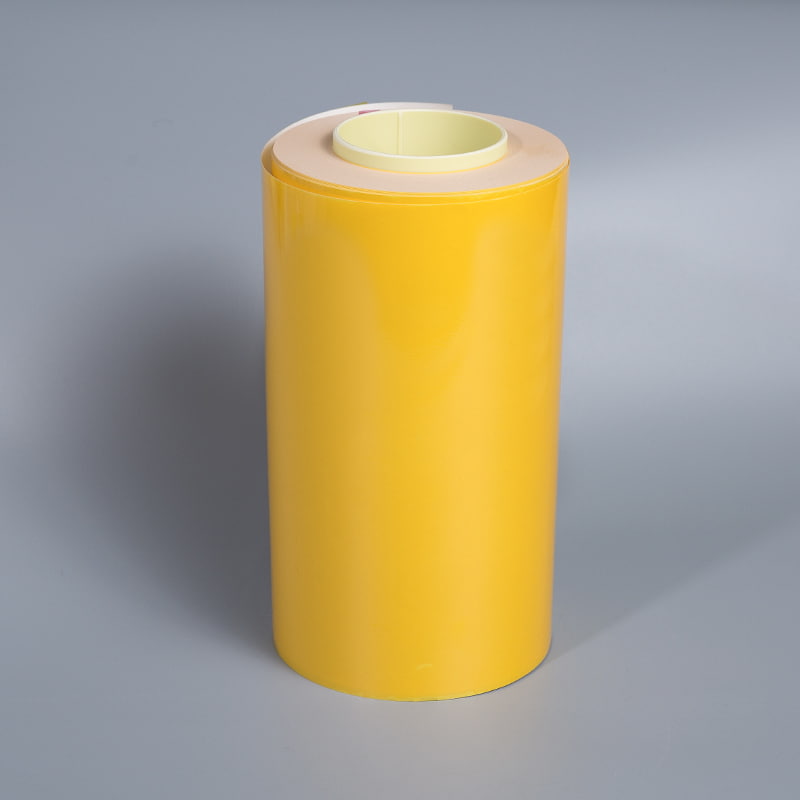
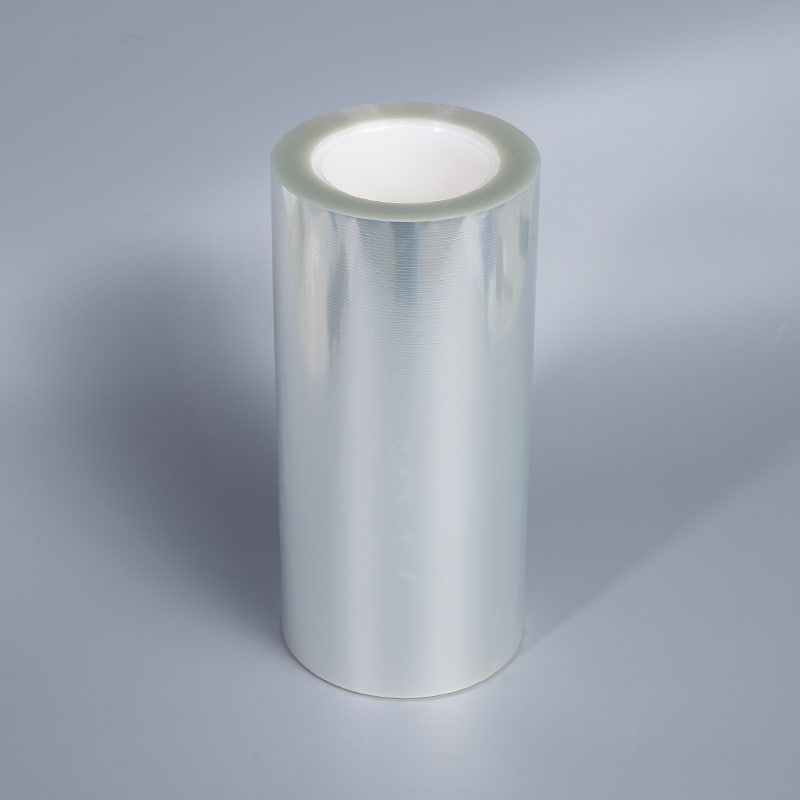
A PET release film is a polyester carrier, typically 12 to 100 microns thick, that holds a cured silicone layer which adhesive peels away from cleanly. The polyester supplies dimensional stability and tensile strength; the silicone supplies the low surface energy that makes controlled peeling possible. The number of silicone faces is the only structural difference between the two families, and that difference cascades through the whole converting process.
Single-Sided Construction
One face carries silicone. The reverse face keeps its polyester character and can be left plain, corona treated for printing and adhesion, or slip modified for easier handling. Because the uncoated side accepts inks, coatings, and adhesives, a single-sided liner often serves as both a release surface and a print web, which is why it dominates label, membrane switch, and medical patch work.
Double-Sided Construction
Both faces carry silicone, usually at two different release levels. The film becomes a true carrier: it can peel from an adhesive on one side while still releasing from an adhesive on the other, or unwind from a roll and be laminated again in the same pass. Double-sided liners are the backbone of double-coated tapes, transfer adhesives, and die-cut stacks.
Why Silicone Coating Uniformity Decides Release Force
Release force is the peel strength needed to pull an adhesive off the silicone surface, normally reported in grams per 25 mm and measured at 180 degrees with a standard tape under controlled temperature and humidity. It is an average value, and averages can hide a great deal.
What gives that average meaning is coating uniformity: how evenly silicone weight is distributed across the web and along the roll. Typical coat weights fall between roughly 0.3 and 1.5 g/m2 per face, depending on the target release level. A difference of a few hundredths of a gram sounds trivial, but silicone works in an extremely thin layer, and small weight differences become measurable differences in peel.
Uniformity problems have recognizable signatures. Streaks and ribbing create bands of tighter and looser release, so a die-cut label peels unevenly. Pinholes and uncoated spots let adhesive anchor to the polyester, producing tears and residue. Heavy edges from bead control at the coating head give a roll two personalities: a docile centre and stubborn edges.
Release force is the number on the specification sheet. Coating uniformity is what makes that number repeatable from the first metre of a roll to the last.
Test programs therefore pair two measurements: a peel test for release force, and a coat weight check, often by X-ray fluorescence, mapped across the web and along the roll. When the two agree, the process is under control. Silicone coated PET release film performance depends on that pairing far more than on any single formulation change.
Release Force Control: How the Two Designs Differ
Single-Sided Films: One Interface to Tune
With one silicone face there is one release interface to tune. Producers adjust the silicone chemistry, whether easy medium or tight, together with coat weight, to reach a target peel. Cure degree matters as much as coat weight: an under-cured layer leaves mobile silicone chains that migrate into the adhesive, while an over-cured or heavily additised layer can push release force down. Because only one face is coated, blocking is rarely a concern and the roll winds at normal tension.
Double-Sided Films: Two Interfaces and a Differential
A double-sided film must control two release values at once, and the relationship between them is the entire point. In a differential construction one face is tight and the other easy. When adhesive is laminated, the easy side should release first and stay with the exposed face, while the tight side holds the liner until final application. Reverse that relationship and the liner delaminates from the wrong side at the wrong moment.
Differentials commonly run from a few grams per 25 mm up to a tight-to-easy ratio near 3 to 1, depending on the adhesive. Both faces must be cured and both must be uniform, since any imbalance between the two coating passes becomes an imbalance in the finished tape. Silicone-to-silicone contact on the roll also makes winding tension, edge quality, and roll hardness more critical than on a single-sided product.
Comparing Single-Sided and Double-Sided Films
The table below summarizes the trade-offs that matter most when a specification is being written.
| Attribute | Single-Sided PET Release Film | Double-Sided PET Release Film |
|---|---|---|
| Silicone faces | One | Two, usually at different release levels |
| Release force variables | Coat weight, cure degree, silicone type | The same, plus the ratio between the two faces |
| Typical coat weight | 0.3 to 1.5 g/m2 on one face | The same range on each face |
| Reverse side | Plain, printable, corona treated, or slip modified | Silicone coated and non-adherable |
| Blocking risk | Low | Higher, needs tension and edge control |
| Relative material cost | Lower silicone consumption | Higher silicone use and two-pass quality control |
| Typical applications | Labels, protective masking, printing, membrane switches, medical patch liners | Double-coated tapes, transfer films, die-cut stacks, self-wound materials |
| Uniformity sensitivity | High | Very high, because both faces must match specification |
Three questions usually settle the choice. Does the adhesive need to release from more than one face in the finished product? If yes, go double-sided. Must the reverse side accept ink, adhesive, or a coating? If yes, go single-sided. Is the liner removed once, in one direction, at one station? If yes, single-sided does the job with less silicone and less risk.
Not every job needs a polyester liner. For label stock that is cut and applied at moderate speeds, a paper liner can be the more economical route, and coated paper release liners remain the default across many label, printing, and packaging operations.
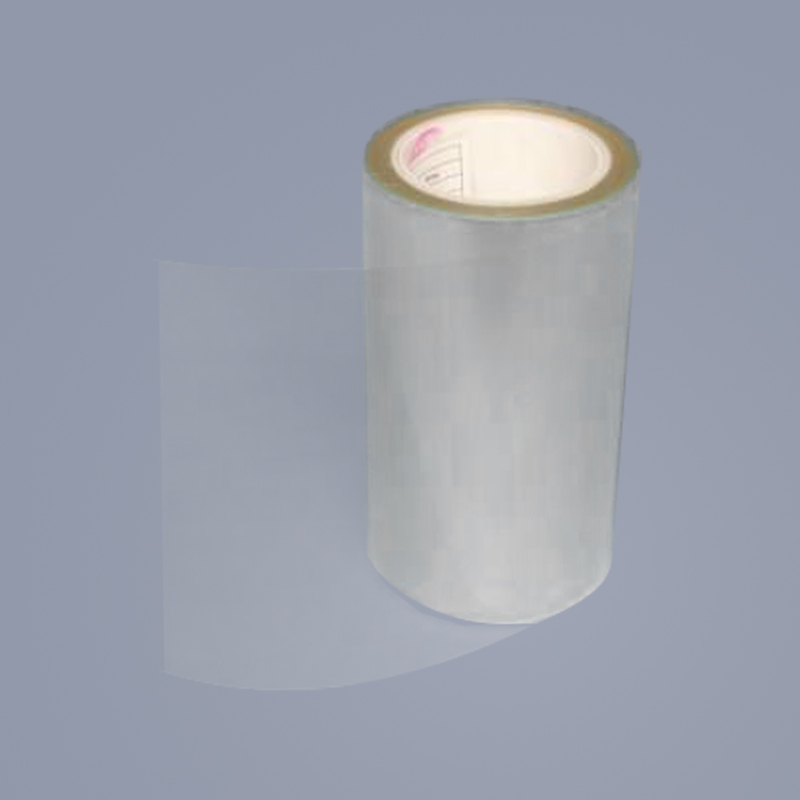 Copperplate Paper Release Paper for Film LabelsCoated paper release liner with good stiffness and smoothness, available in single- or double-sided coating and 500–1600 mm widths for film labels.View Product →
How to Specify a PET Release Film
Bring these items to the conversation with your supplier:
- Carrier thickness and the tensile or dimensional stability the web must hold.
- Target release force in grams per 25 mm, with the test tape and peel angle named.
- The allowed release force range, not only a single target value.
- Silicone face count, and for double-sided film the tight-to-easy ratio.
- Coat weight and the uniformity tolerance you will accept across the web.
- Whether the reverse side must be printable, corona treated, or slip modified.
- Roll width, core size, winding direction, and maximum roll length.
- Storage and shelf life expectations, typically six to twelve months in a dry, temperate warehouse.
Where release force has to stay stable across several adhesive chemistries, a supplier that can document coat weight and cure control is worth more than one that only quotes a lower price. Moving from light to heavy release is a specification exercise, not a guess.
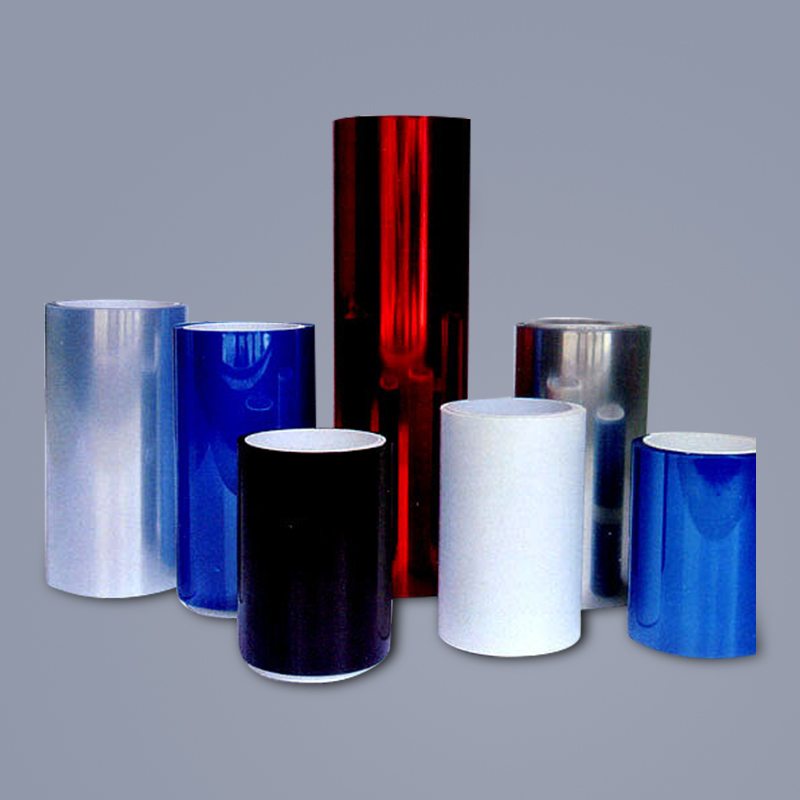
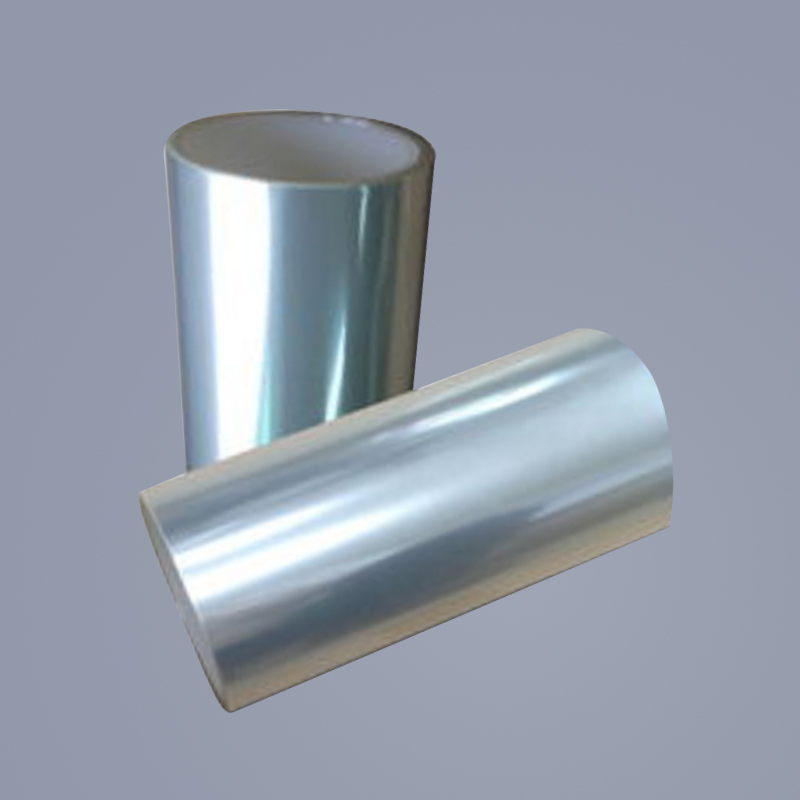
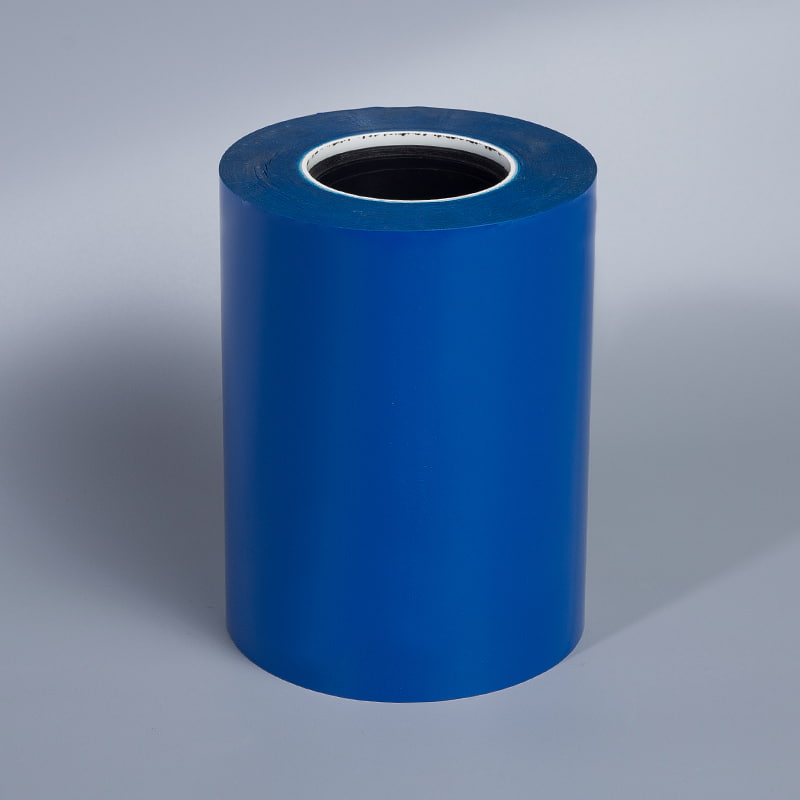 PET Release Film for Printing, Adhesive, and Die-CuttingSilicone-coated PET film available single- or double-sided, in 12–100 µm, with stable release, high transparency, and smooth rolls for converting.View Product →
Frequently Asked Questions
Q1: What is the main difference between single-sided and double-sided PET release film?
Single-sided film carries silicone on one face and leaves the other face available for printing, coating, or adhesion. Double-sided film coats both faces, usually at two different release levels, so adhesive can be removed from either side in a controlled order.
Q2: How is release force measured on PET release film?
Most specifications use a 180 degree peel test with a standard tape at a fixed speed, with results reported in grams per 25 mm. Because the result depends on the adhesive, the dwell time, and the ambient conditions, the test tape and the test conditions belong in the specification next to the number.
Q3: Why does release force drift during storage?
Common causes are under-cured silicone, migration of low molecular weight silicone into the adhesive, plasticisers moving out of the adhesive, and warm storage. A well-controlled product kept in a temperate warehouse usually holds its release force for six to twelve months.
Q4: Can a double-sided film replace a single-sided liner?
Sometimes, but the second silicone face cannot accept printing or adhesive, and it adds cost and blocking risk. If only one surface ever releases, single-sided film is normally the better engineering choice.
Single-sided and double-sided PET release film answer different questions. One asks how little silicone can do the job; the other asks how two release values can be made to work in sequence. In both cases the same discipline applies: define the release force window, verify the coat weight that delivers it, and confirm that the coating is uniform across the web and along the roll. Do that, and the liner stops being a variable in your process.