 En
En  中文简体
中文简体 西班牙语
西班牙语

Article Directory
- 1 What Is Automotive Paint Protection Film
- 2 Paint Protection Film Structure and Layers
- 3 Paint Protection Film Materials: Why TPU Dominates
- 4 How Self-Healing Paint Protection Film Works
- 5 Paint Protection Film Manufacturing Process
- 6 Paint Protection Film Durability and Performance
- 7 Paint Protection Film vs. Ceramic Coating
- 8 Automotive Protective Film Applications Beyond Paint
- 9 How to Choose Paint Protection Film
- 10 Cost and Maintenance After Installation
Quick answer: Automotive paint protection film (PPF) is a clear, flexible TPU film applied over factory paint to absorb stone chips and abrasion before they reach the clear coat. Modern films use a self-healing top coat that recovers from light scratches with heat, and quality depends less on brand name than on film thickness, UV stability, and how well it's installed.
What Is Automotive Paint Protection Film
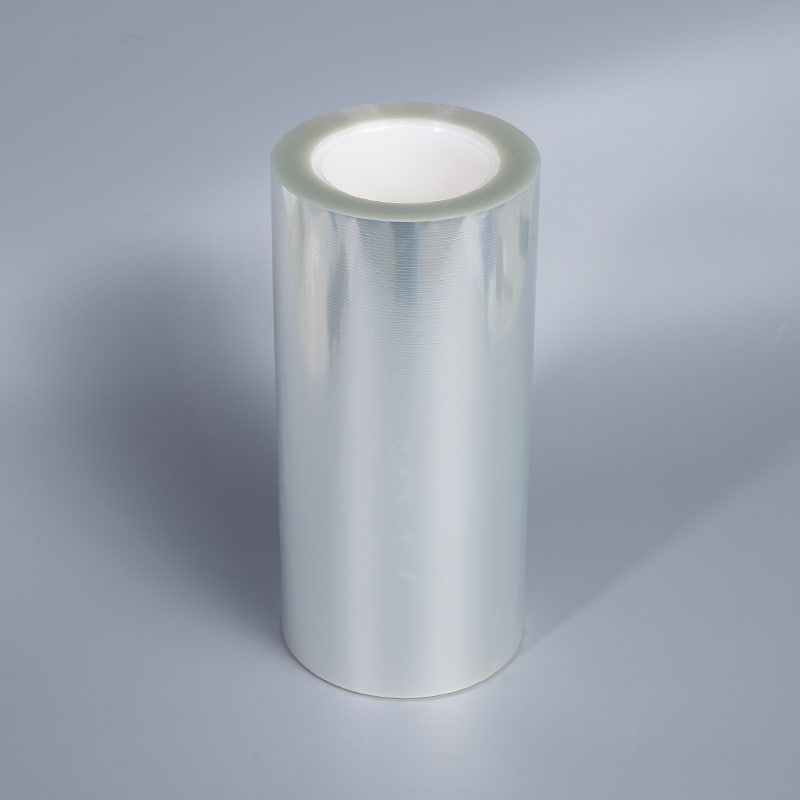
Automotive paint protection film is a transparent, flexible film applied directly over a vehicle's factory paint to absorb impact from road debris, stone chips, and minor abrasion before that damage reaches the paint underneath. Rather than replacing paint protection with a coating that sits chemically on the surface, film acts as a physical sacrificial layer — it takes the impact itself, and any resulting scuffs or chips show up on the film rather than the clear coat below it.
A properly installed clear paint protection film for cars is designed to be effectively invisible once applied — modern films are optically clear, hydrophobic on the surface, and finished to preserve the factory paint's gloss level rather than dulling it, which is why the product has moved from a niche fleet and commercial-vehicle solution decades ago into a mainstream aftermarket and even factory-installed option on many new vehicles today.
Coverage varies widely depending on budget and priorities — from partial kits covering just the front bumper, hood edge, and mirror caps (the areas that take the most highway debris impact), up to full-vehicle wraps that cover every exterior painted panel. The film itself is typically installed either as pre-cut patterns matched to a specific vehicle model or as bulk rolls hand-cut and shaped by an installer during application.
The category has also split into gloss and matte (satin) finishes, with matte film gaining popularity as a way to change a vehicle's finish while still getting the same protective benefit as a gloss film — this is functionally the same base film construction with a different top coat finish, not a separate protective technology.
Paint Protection Film Structure and Layers
Understanding paint protection film structure and layers explains why the product performs the way it does — PPF isn't a single sheet of plastic, but a laminated stack where each layer does a specific job:
① Top coat — a thin, often self-healing polymer layer that provides scratch resistance, gloss, and the surface that road debris actually contacts first.
② Base film layer — the main structural layer, usually polyurethane, that provides the film's impact absorption and flexibility to conform to curved body panels.
③ Adhesive layer — a pressure-sensitive acrylic adhesive that bonds the film to the painted surface, engineered to hold securely for years while still being removable without damaging factory paint.
④ Release liner — a protective backing sheet that's peeled off and discarded immediately before installation, keeping the adhesive layer clean and protected during shipping and handling.
The interaction between the top coat and base layer is what determines how a film performs against impact — a film needs enough flexibility in the base layer to absorb energy without cracking, combined with a top coat hard enough to resist surface marring, and manufacturers spend considerable R&D effort balancing these two competing properties against each other.
Total film thickness across all four layers typically runs between 150 and 200 microns for automotive-grade product, though the proportion dedicated to each layer varies by manufacturer — some prioritize a thicker base layer for maximum impact absorption, while others favor a thicker top coat for stronger self-healing performance at the cost of slightly less impact resistance.
Paint Protection Film Materials: Why TPU Dominates
Among the various paint protection film materials tested and used over the product's history, thermoplastic polyurethane has become the dominant base material for modern films, largely displacing the PVC-based films common in earlier generations of the product. TPU paint protection film offers a combination of properties that's difficult to match with alternative materials: high elasticity that lets it stretch around compound curves without stress-whitening or cracking, strong resistance to UV-driven yellowing over years of sun exposure, and enough impact absorption to genuinely reduce stone chip damage rather than just adding a thin cosmetic layer.
PVC films, by comparison, tend to be stiffer and less able to conform to complex body panel shapes, and they're more prone to yellowing and becoming brittle with prolonged UV exposure — which is part of why PVC-based film has largely fallen out of favor for exterior automotive applications despite its lower material cost, even though it can still show up in lower-tier or budget film products.
Within TPU films specifically, manufacturers differentiate further through additive packages and processing methods — some formulations prioritize maximum elasticity for wrapping tight curves, others prioritize hardness and abrasion resistance for high-impact zones like the front bumper and hood leading edge, and premium lines often blend both properties across different film thicknesses within the same product family.
Aromatic versus aliphatic TPU chemistry is another distinction worth knowing about. Aliphatic TPU resists UV yellowing far better over the long term and is the standard choice for exterior automotive film, while aromatic TPU is cheaper to produce but yellows more readily under sustained sun exposure — a difference that may not be obvious on a spec sheet but becomes very apparent on the vehicle after a year or two outdoors.
How Self-Healing Paint Protection Film Works
Self healing paint protection film is built around a top coat polymer that has elastic memory — when a light scratch or swirl mark disrupts the coating's surface, the polymer's molecular structure gradually returns to its original shape rather than staying permanently deformed. This isn't a chemical reaction that fills in the scratch with new material; it's a physical property of the coating itself relaxing back toward its unstressed state.
Heat accelerates this process significantly, which is why self-healing marketing demonstrations almost always show a film recovering from light scratches after warm water or direct sunlight exposure — the added thermal energy speeds up the polymer chains' return to their original configuration compared to leaving the film to recover at ambient temperature alone. Deeper cuts or gouges that go through the top coat into the base film layer generally won't self-heal, since the effect is limited to the elastic top coat and doesn't extend to structural damage in the layers beneath it.
It's worth setting realistic expectations here — self-healing film significantly reduces the accumulation of light swirl marks and fine scratches from washing, wiping, and minor contact over years of use, but it isn't a substitute for the base film's impact absorption against actual stone chips, which is a separate function handled by the underlying TPU layer rather than the top coat.
Self-healing performance also isn't permanent across the film's entire service life — the polymer's elastic recovery capacity gradually diminishes as the top coat ages and accumulates UV exposure, which is one reason self-healing film is typically still given a finite warranty period rather than an indefinite guarantee of scratch recovery.
Paint Protection Film Manufacturing Process
The paint protection film manufacturing process starts with producing the base TPU film through extrusion or casting, where raw polyurethane resin is melted and formed into a continuous, precisely controlled-thickness sheet. Thickness consistency at this stage matters enormously downstream — variations of even a few microns can affect optical clarity and how evenly the film conforms during installation.
Once the base film is formed, the top coat layer is applied through a coating process that deposits the self-healing polymer in a thin, even layer across the base film's surface, followed by a curing stage that sets the coating's final properties. The adhesive layer is applied on the opposite side, followed by lamination of the release liner that protects the adhesive until installation.
Quality control throughout this process focuses heavily on optical clarity, thickness uniformity, and adhesion strength testing — since defects introduced during manufacturing, such as micro-bubbles trapped between layers or inconsistent adhesive coverage, are essentially impossible to fix after the film reaches an installer, and typically only become visible once the film is actually applied to a vehicle.
After the laminate stack is complete, rolls are slit to standard widths and wound for shipping, or in some cases die-cut into pre-shaped patterns matched to specific vehicle panels using digital templates. Pre-cut pattern accuracy depends heavily on how precisely the manufacturer's template library tracks actual vehicle body panel dimensions, which is why pattern quality can vary noticeably between suppliers even when the underlying film material is similar.
Paint Protection Film Durability and Performance
Several factors determine real-world paint protection film durability and performance, and they don't always align with what a spec sheet emphasizes:
That last row matters more than buyers often expect — even premium film with excellent material properties can fail prematurely at the edges if it's installed with poor edge sealing or trapped moisture, since a lifted edge gives dirt and moisture a path to work underneath the film over time. This is why installer skill and reputation are frequently just as important a purchasing consideration as the film brand itself.
Most reputable automotive-grade films carry manufacturer warranties in the 5 to 10 year range covering yellowing, cracking, and adhesive failure under normal conditions, though actual visible lifespan depends heavily on climate — vehicles in high-UV, high-heat regions generally see faster top coat aging than those in milder climates, even with an identical film product.
Paint Protection Film vs. Ceramic Coating
These two products get bundled together in marketing but solve different problems, and understanding the distinction helps explain why many vehicle owners end up using both rather than choosing one over the other. Ceramic coating is a thin, chemically bonded liquid layer that sits on top of the existing paint, providing strong hydrophobic water beading, added gloss, and some resistance to chemical staining and minor oxidation — but it adds essentially no physical thickness and offers no meaningful protection against stone chips or physical impact.
PPF, by contrast, has real physical thickness and is specifically built to absorb impact energy — its strength is mechanical protection, not surface chemistry. A common and increasingly standard approach is applying PPF to impact-prone areas (front bumper, hood, mirrors, rocker panels) and then applying a ceramic coating over both the film and the remaining exposed paint, combining the impact protection of film with the water-beading and gloss-enhancing properties of a ceramic topcoat across the whole vehicle.
Automotive Protective Film Applications Beyond Paint
While paint protection film is best known for exterior body panels, automotive protective film applications extend into several other areas of a vehicle where the same impact-absorbing, self-healing film properties are useful:
Headlight protection — clear film applied over headlight lenses to prevent stone chip pitting and reduce UV-driven yellowing of the lens plastic.
Interior wear surfaces — door sills, center console edges, and touchscreen surfaces, where the concern is scuffing and everyday contact rather than road debris.
Wheel and rim protection — film applied to wheel faces to reduce curb rash and brake dust etching on the finish.
Chrome and trim pieces — protecting polished or plated trim from scratching during regular washing and detailing.
Film formulated for these secondary applications isn't always identical to full-body PPF — headlight and interior films, for example, are often thinner and prioritize optical clarity or flexibility for tight interior contours over the maximum impact absorption that a hood or bumper film is built for.
How to Choose Paint Protection Film
Working out how to choose paint protection film comes down to matching a handful of specifications against actual priorities rather than defaulting to whichever product is marketed most heavily:
- Coverage area — decide between partial front-end protection and full-vehicle coverage based on driving conditions; highway-heavy driving justifies broader coverage than mostly urban, low-speed use.
- Film thickness — thicker films generally offer better impact resistance but can be marginally more visible at panel edges; most quality automotive PPF falls in a 6-8 mil (150-200 micron) range.
- Warranty length and terms — check whether the warranty covers yellowing, cracking, and edge lifting specifically, not just a generic multi-year coverage claim, and confirm what voids it.
- Installer experience with the specific film — different films handle differently during installation, and an installer's familiarity with a given product often matters as much as the film's own spec sheet for how the final result looks and holds up.
- Pre-cut pattern availability — a film with an accurate, model-specific pre-cut pattern for the vehicle reduces installation time and the risk of hand-cutting errors compared to bulk roll installation.
- Finish preference — gloss film preserves the factory look, while matte film changes the vehicle's appearance; this is a cosmetic choice rather than one that affects protective performance.
For most buyers, the practical starting point is deciding on coverage area and budget first, then narrowing film choice within that scope — trying to compare every film brand's full spec sheet before settling on a coverage plan usually leads to decision fatigue without meaningfully improving the final outcome, since installation quality tends to matter as much as the film itself once a reasonably reputable TPU-based product is selected.
Cost and Maintenance After Installation
Cost scales with both coverage area and film tier — partial front-end kits sit at the lower end of the price range, while full-vehicle coverage using premium self-healing film represents a considerably larger investment, largely driven by the labor time a full wrap requires rather than material cost alone, since a full installation can take an experienced installer a full day or more to complete properly.
Maintenance requirements after installation are relatively light compared to some other protective products — regular washing with pH-neutral car soap, avoiding automated brush car washes that can lift film edges, and periodic inspection of edges and seams for any early signs of lifting are generally sufficient to get the full expected service life out of the film. Waiting the manufacturer-recommended curing period (often 48-72 hours) before washing or exposing the vehicle to heavy rain after installation is also worth following, since the adhesive needs time to fully bond before it's exposed to water or mechanical stress.