 En
En  中文简体
中文简体 西班牙语
西班牙语

Article Directory
- 1 The Liner Sets the Geometry of Every Precision Cut
- 2 PET Release Film vs. Paper Liners: A Direct Comparison
- 3 The Material Reasons PET Wins
- 4 Where PET Release Film Pays Off Most
- 5 When a Paper Liner Is Still the Better Choice
- 6 How to Specify PET Release Film for Your Die-Cutting Line
- 7 Frequently Asked Questions
In high-precision die-cutting, the facestock and the adhesive get all the attention. The liner is usually treated as little more than a carrier that stops the roll from sticking to itself. That assumption collapses the moment tolerances tighten. When a finished part is smaller than a fingernail, when a kiss-cut has to stop within a few microns of the adhesive layer, or when a rotary press runs at speed with web tension measured in single newtons, the liner stops being passive packaging and becomes an active process variable.
This guide explains why PET release film outperforms paper liners in high-precision die-cutting, where those advantages actually come from, and how to choose the right substrate for a specific job.
The Liner Sets the Geometry of Every Precision Cut
A die-cutting laminate is a stack of facestock, adhesive, and liner. The liner is normally the thickest and stiffest layer, and it is the surface the die strikes against. Any dimensional change in that layer travels upward through the adhesive and the facestock: registration drifts, dies strike off center, and a run that was perfectly aligned at startup is out of specification before the roll is finished.
Kiss-cutting sharpens the point further. The die penetrates the facestock and the adhesive and stops on the liner surface. Penetration depth is fixed by the tool, so what actually varies during a run is the liner itself. Paper liners are hygroscopic, meaning their moisture content follows ambient relative humidity and their caliper and flatness move with it. PET release film does not take up water in any practical sense, so its thickness and web behavior stay stable from the first meter to the last.
PET Release Film vs. Paper Liners: A Direct Comparison
The table below compares the two substrate families on the criteria that decide yield on a precision line, rather than on catalog claims.
| Aspect | PET Release Film | Coated Paper Liner |
|---|---|---|
| Humidity response | No measurable swelling | Fibers swell and shrink with humidity |
| Caliper uniformity | Tight and consistent across the roll | Wider variation within and between rolls |
| Surface profile | Optically smooth, low roughness | Fiber texture can telegraph through thin facestocks |
| Kiss-cut behavior | Consistent depth, clean cut edges | Variable penetration and fiber tear risk |
| High-speed webs | Runs under higher tension without breaks | More break-prone as line speed rises |
| Dust and particles | Low particulate, clean slitting | Fiber dust can contaminate the adhesive |
| Inline inspection | Transparent, allows visual checking | Opaque, hides defects until unwind |
| Cost per square meter | Higher | Lower |
The Material Reasons PET Wins
Dimensional stability under changing humidity
Polyester film is a biaxially oriented thermoplastic with very low moisture uptake, typically well under one percent even in tropical conditions. Paper is a fiber network held together by hydrogen bonding, and those bonds respond to water vapor in the air. In an uncontrolled converting hall the relative humidity can swing twenty points between a morning shift and an overnight shift, which is enough to move a paper liner in and out of tolerance while the die stays perfectly fixed.
Caliper tolerance and thickness uniformity
Because PET release film is cast and stretched under controlled tension, thickness tolerance is measured in microns rather than in percentage points. That uniformity matters twice: it keeps the die-to-liner gap constant across the web, and it keeps unwind tension smooth, which in turn protects print registration on the facestock above it.
Silicone anchorage and predictable release force
On film, a silicone coating cures on an extremely smooth surface, so the release layer is even and the release force stays within a narrow band peel after peel. Paper liners are more porous and their coating weight varies with surface absorption, which produces release curves that drift across the roll and complicate high-speed dispensing, labeling, and automated assembly.
Where PET Release Film Pays Off Most
Manufacturers evaluating a substrate change can review the range offered by Anhui Hengbo New Material Co., Ltd., a PET film and release film producer based in Anhui Province, China, whose materials serve printing, electronics, medical, and die-cutting supply chains.
- Smartphone screen protectors and optical films: thin facestocks demand a liner that will not print its own texture through the product.
- Flexible printed circuits and membrane switches: registration tolerances leave no room for humidity-driven growth.
- Nameplates, overlays, and laser anti-counterfeiting labels: transparent liners allow inline inspection of the cut.
- Medical patches and hygiene products: low particulate and stable release support clean converting.
- High-speed label lines: higher running tension without web breaks means fewer stops and less waste.
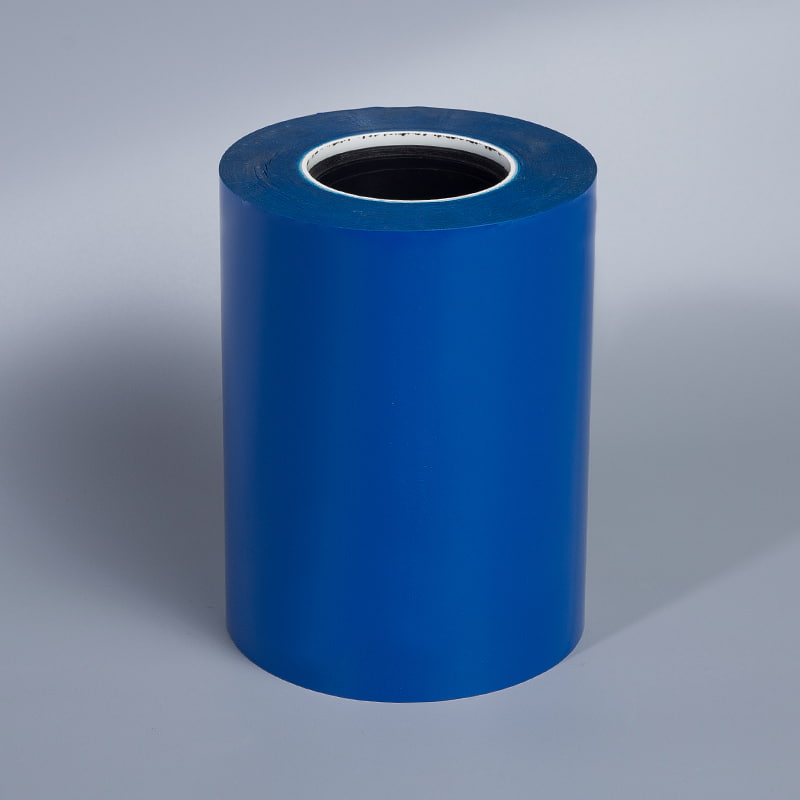 PET Release Film and Silicone Coating CategoryCategory page outlining PET release films with silicone coating options, colors, thicknesses from 12um to 100um, and uses across printing, electronics, medical, and die-cutting.View Product →
When a Paper Liner Is Still the Better Choice
Paper liners remain a rational option in plenty of projects. If parts are large, tolerances are generous, converting runs at moderate speed, and the climate is controlled, a coated paper liner can deliver acceptable performance at a lower material cost. Short runs and manual assembly often fall into the same category.
Paper also has characteristics that film does not replicate. A matte, textured surface can be useful for specific tactile finishes, and paper liners handle well in some flatbed operations. Where the choice is genuinely close, converters often test both families side by side on the same die and the same press before committing to a full production order, using materials such as 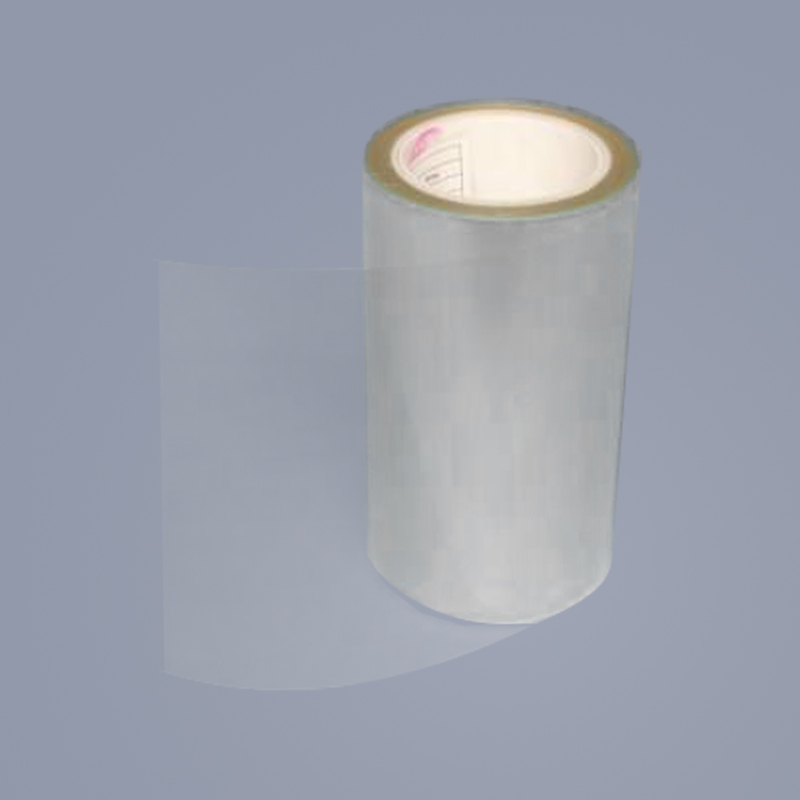 Copperplate Paper Release Paper for Film LabelsSingle- or double-sided coated release paper with good stiffness, smoothness, and stability, available in 500–1600 mm widths for film label applications.View Product → coated paper release paper or
 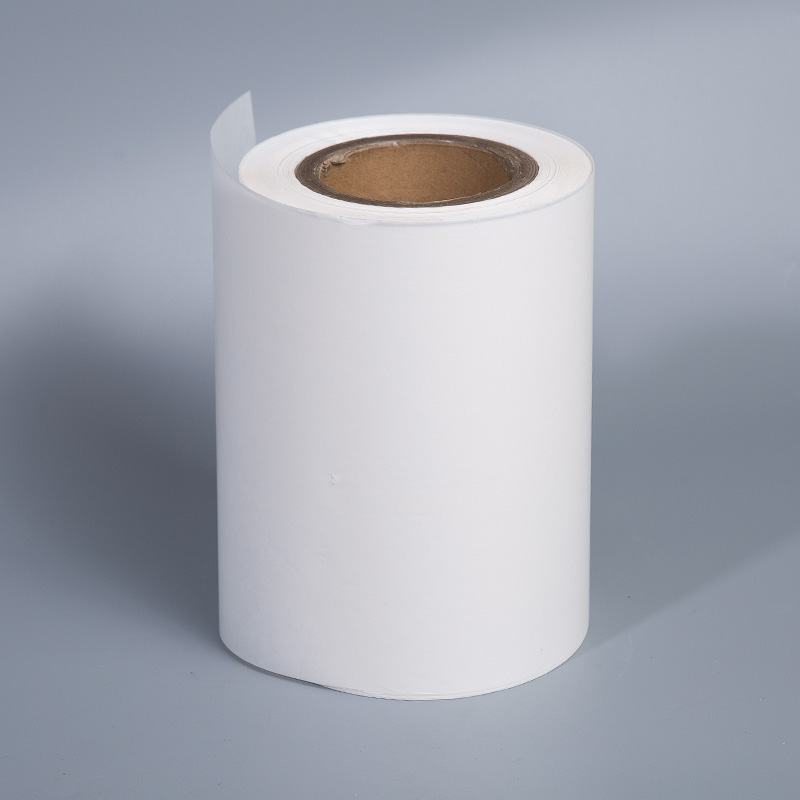 Glassine Release Paper for Labels and TapesCategory covering glassine release papers with smooth, transparent, temperature-resistant sheets, silicone coating options, 40–120gsm weights, and uses in labels, tapes, electronics, and medical applications.View Product → high-transparency release paper as the reference points.
How to Specify PET Release Film for Your Die-Cutting Line
A specification is only useful if it captures the variables that decide yield. These are the points worth locking down with a supplier before a trial run:
- Release force: match the value to the adhesive chemistry and the peel speed of the line, not to a generic number.
- Thickness: choose a caliper that supports the die without adding unnecessary web stiffness.
- Silicone system: thermal-cure and UV-cure coatings behave differently under high-speed dispensing.
- Release side and surface: single or double-sided, and whether one face must remain printable.
- Roll format: width, core diameter, splice quality, and maximum roll diameter for the unwind.
- Cleanliness: particulate limits for electronics and medical applications.
Release force is the specification most often set by habit instead of by test. A structured look at light to heavy release PET film specifications helps engineers map the available range to their adhesive and their line speed, then verify the choice on a short trial roll.
Frequently Asked Questions
Q1: Is PET release film always more expensive than paper?
Per square meter, yes. Per finished part, not necessarily. Lower scrap rates, fewer web breaks, and less downtime often offset the higher material price on a precision line.
Q2: Can PET release film run on existing die-cutting equipment?
In most cases it can. Because film is thinner for the same stiffness and has a smoother surface, tension and die depth settings usually need a short adjustment during the trial run.
Q3: Does a transparent liner cause optical inspection problems?
The opposite is true. Transparency allows cameras and operators to see the cut edge directly, which is difficult with an opaque paper liner.
Q4: How do I know if my process needs film rather than paper?
Check three signals: parts below roughly 20 mm, kiss-cut depths that must hold within microns, and relative humidity that varies more than ten points in the converting area. Any one of them justifies a trial.
Substrates matter because they quietly define what a process can and cannot achieve. Paper liners are still a sound choice for generous tolerances and stable environments, but on a line chasing micron-level depth control, stable registration, and clean edges at speed, PET release film removes a variable that paper can never fully control. The practical step is not an immediate switch on every job, but a controlled comparison on the tightest application in the plant.