 En
En  中文简体
中文简体 西班牙语
西班牙语

Article Directory
In the precision-driven world of automated packaging, the stability of the release force is the decisive factor between seamless high-speed labeling and costly production downtime. Adhesive release paper, serving as the carrier for pressure-sensitive labels, must exhibit consistent separation characteristics under varying mechanical tensions. Anhui Hengbo New Material Co., Ltd., established in 2017, specializes in the R&D and manufacturing of high-performance PET polyester films and release materials. Operating under ISO9001 international standards, we provide customized solutions for circuit boards, membrane switches, and medical applications. By focusing on the molecular engineering of silicone coatings, we help our global partners achieve the "easy-peel" consistency required for the most demanding high-speed labeling lines.
The Impact of Coating Technology on Release Stability
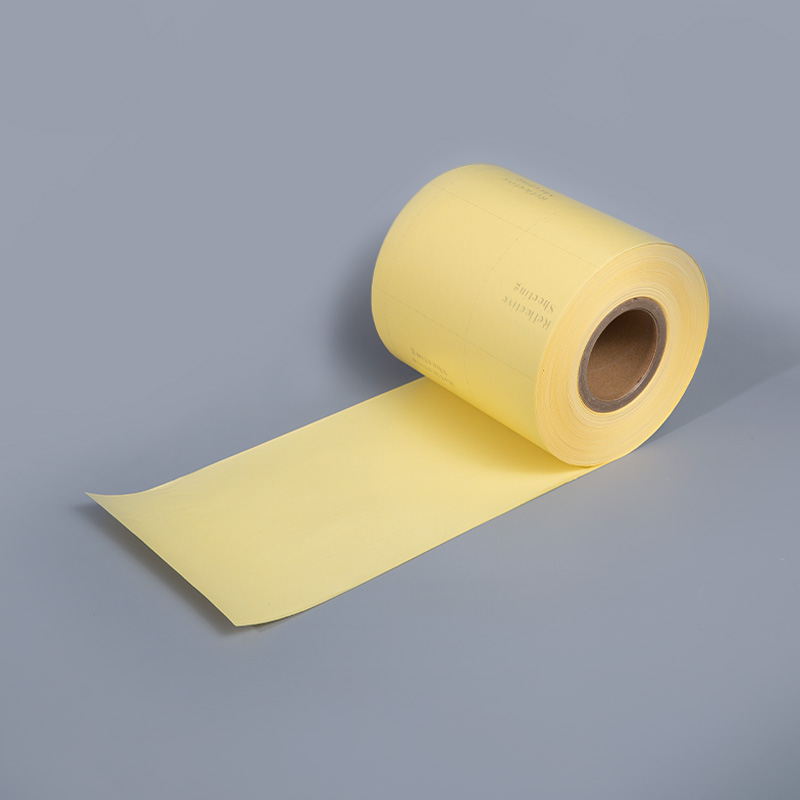
The stability of adhesive release paper is primarily governed by the silicone coating's cross-linking density and surface smoothness. In high-speed labeling environments, any microscopic fluctuation in the coating can lead to "label fly" or adhesive transfer. According to the FINAT Technical Handbook 2024 (10th Edition), high-speed automated applicators now require release values to be maintained within a ±5% tolerance range to prevent web breaks. Transitioning from traditional solvent-based coatings to solvent-free silicone release paper for labels has become the industry standard for improving environmental compliance while maintaining a stable release profile. Solvent-free systems offer a more uniform polymer matrix, which reduces the "zip" effect during rapid separation.
Source: FINAT - European Association for the Self-Adhesive Labeling Industry: Technical Standards 2024
Comparison: Solvent-Based vs. Solvent-Free Coating Performance
While solvent-based systems allow for lower coat weights, solvent-free coatings provide superior thermal stability and a more consistent release force over long storage periods.
| Performance Metric | Solvent-Based Release Coating | Solvent-free silicone release paper for labels |
| Coating Uniformity | Higher risk of pinholes due to evaporation | Highly uniform polymer matrix |
| Release Force Stability | Moderate (Can fluctuate with humidity) | High (Excellent resistance to environmental aging) |
| High-Speed Performance | Prone to "speed sensitivity" | Stable release even at 100m/min+ |
| Environmental Impact | Requires VOC recovery systems | Eco-friendly and sustainable |
Substrate Selection and Thermal Dimensional Stability
A stable release force is not solely dependent on the silicone; the base carrier plays a vital role. For high-speed applications, glassine release paper for automated labeling is often preferred due to its high density and excellent internal bond strength. The substrate must resist the high temperatures encountered during the silicone curing process without losing its moisture content. According to the 2025 Market Report by AWA (Alexander Watson Associates), the global demand for high-calendered glassine is projected to grow by 4.2% annually, driven by the need for thinner, more thermally stable liners that support faster die-cutting speeds. For electronics and medical applications, double sided silicone coated release paper utilizing high-tensile base stocks ensures that complex die-cut parts do not pre-release during winding.
Source: AWA - Global Release Liner Market Update 2025
Substrate Comparison: Glassine vs. PET Film
Glassine offers better cost-efficiency for bulk labeling, whereas PET release film for electronic components provides superior cleanliness and thickness tolerance for precision die-cutting.
| Technical Characteristic | Glassine release paper for automated labeling | PET release film for electronic components |
| Thickness Tolerance | Standard (±10%) | Precision (±3%) |
| Tensile Strength | Good for paper-based systems | Superior (Prevents stretching under high tension) |
| Surface Energy | Requires surface sizing | Inherent high smoothness |
| Application | FMCG and Retail Labeling | MEMS, Flexible Circuits, and Medical |
Quality Control and Advanced Testing Protocols
At Anhui Hengbo, we understand that "release force" is a dynamic value. To ensure adhesive release paper performs at high speeds, it must be tested at various peel angles and velocities. We implement customized release paper for medical adhesive products using a multi-speed peel tester to simulate the actual conditions of a labeling machine. Controlling the "Curing Rate" (extractable percentage) is essential; any uncured silicone can migrate to the adhesive, poisoning the label and causing it to fall off after application. Our goal is to provide easy peel release paper for sanitary products and high-end electronics that maintain a consistent "S-curve" of release force throughout the entire roll.
- Curing Analysis: Utilizing FT-IR spectroscopy to ensure 98%+ silicone polymerization.
- Rub-off Testing: Ensuring the silicone bond to the paper is permanent to prevent coating transfer.
- Aging Simulation: Testing release force after 7 days at 70°C to predict long-term shelf stability.
- Precision Calendering: Ensuring the substrate thickness is uniform to prevent die-cutting breakthroughs.
Frequently Asked Questions (FAQ)
1. Why does release force increase during high-speed labeling?
This is known as "speed sensitivity." Adhesive release paper with high speed sensitivity requires more force to separate at higher velocities. Using solvent-free silicone release paper for labels with specific additives can flatten this curve.
2. Can I use glassine paper for medical plasters?
Yes, glassine release paper for automated labeling is commonly used for medical plasters, but for wound dressings requiring transparency or ultra-cleanliness, PET release film is generally recommended.
3. What is the shelf life of your release materials?
Our adhesive release paper is engineered to maintain stable release values for 6 to 12 months when stored in a cool, dry environment (23°C, 50% RH).
4. How do you prevent silicone migration?
We use high-grade platinum catalysts and specialized anchoring agents in our double sided silicone coated release paper to ensure the silicone is fully cured and chemically bonded to the substrate.
5. Is your release paper compatible with hot-melt adhesives?
Absolutely. We offer customized release paper for medical adhesive products designed to withstand the heat of hot-melt application without affecting the release force stability.