 En
En  中文简体
中文简体 西班牙语
西班牙语

Article Directory
- 1 The Physics of Release Force at High Velocity
- 2 Material Selection and Structural Stability
- 3 Optimizing the Silicone Coating Process
- 4 Frequently Asked Questions (FAQ)
- 4.1 1. Why does my release force increase as I speed up my die-cutter?
- 4.2 2. Can I get a customized release force for my specific adhesive?
- 4.3 3. How does silicone coated glassine release paper compare to PET in terms of cost?
- 4.4 4. What are the benefits of wholesale double sided release paper rolls?
- 4.5 5. Is medical grade release paper for plasters different from industrial paper?
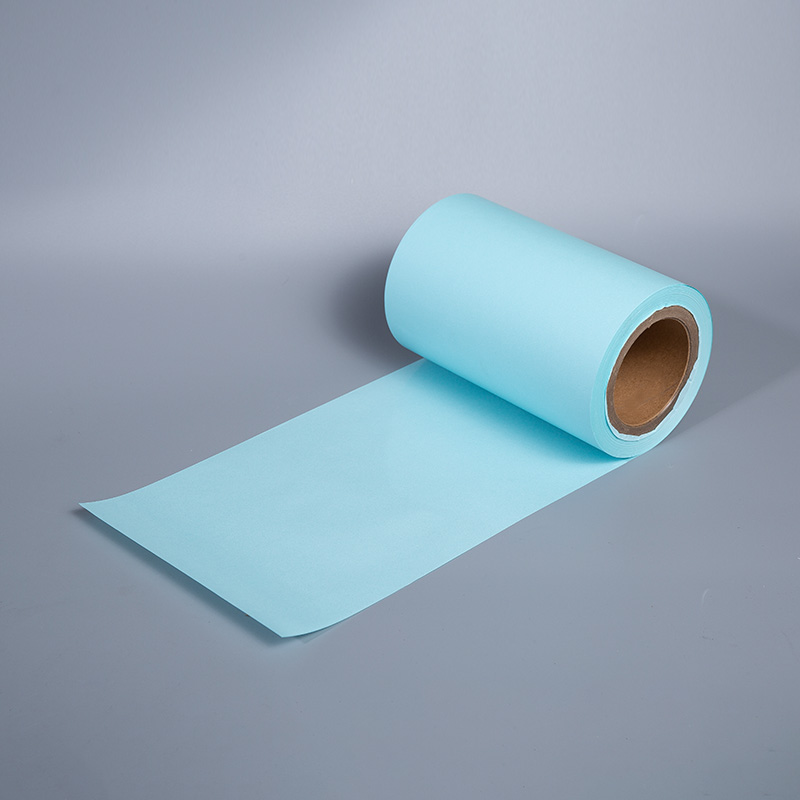
In the precision world of adhesive product manufacturing, the release paper roll serves as more than just a carrier; it is a critical component that determines the success of high-speed die-cutting operations. For engineers and B2B procurement specialists, maintaining a stable release force is essential to prevent issues such as "label fly" or adhesive transfer. Anhui Hengbo New Material Co., Ltd., an ISO9001 certified leader established in 2017, specializes in PET polyester film and high-performance release materials. Our commitment to safety production standardization and customized solutions allows us to provide materials that excel in demanding industries, from flexible circuits to medical plaster paper.
The Physics of Release Force at High Velocity
Release force is not a static value; it is highly dependent on the "peel speed." During high-speed die-cutting, the kinetic energy involved can cause a standard release paper roll to exhibit erratic release behavior. This is primarily due to the rheological properties of the silicone coating and the adhesive interface. According to the 2025 technical guidelines from FINAT (The Association for the Self-Adhesive Label Industry), maintaining a "flat" release profile—where the force remains constant despite increasing peel speeds—is now the gold standard for high-efficiency converting lines. New testing methodologies under FINAT FTM 10 emphasize the need for materials that can withstand speeds exceeding 300 meters per minute without compromising structural integrity.
Source: FINAT - Technical Handbook and Test Methods 2024-2025
Comparing Standard vs. High-Speed Release Liners
While standard liners are suitable for manual application, they often fail in automated environments. A high speed die cutting release liner is engineered with a specific silicone cross-linking density to ensure that the release force remains predictable. Standard liners often show a "speed-up" effect where the release force doubles as velocity increases, leading to material tearing or waste.
| Performance Metric | Standard Release Paper | High speed die cutting release liner |
| Release Profile | Steep curve (Force increases with speed) | Flat profile (Force remains stable) |
| Risk of Adhesive Ghosting | Moderate to High | Very Low |
| Ideal peel velocity | < 50 m/min | > 200 m/min |
Material Selection and Structural Stability
The base substrate of the release paper roll plays a vital role in force consistency. Glassine and PET are the most common choices, but for high-precision electronics or medical applications, a silicone coated glassine release paper is often preferred due to its excellent caliper consistency and high tensile strength. Caliper variation is the enemy of high-speed die-cutting; even a few microns of difference can lead to uneven die-strike, which indirectly affects how the release force is perceived during the stripping process. Anhui Hengbo New Material addresses this by providing customized solutions in PET release film and paper that meet the specific density requirements of diverse industries.
Impact of Substrate on Release Stability
In high-speed contexts, the choice between paper and film is often determined by thermal and mechanical stress. A customized PET release film for electronics offers superior dimensional stability compared to paper, which may be more susceptible to humidity-induced curling that alters release dynamics.
| Substrate Feature | Silicone coated glassine release paper | Customized PET release film for electronics |
| Dimensional Stability | Sensitive to moisture | Highly stable |
| Surface Smoothness | High (calendered) | Ultra-high (optical grade) |
| Die-cutting Precision | Good for mechanical dies | Excellent for laser and rotary dies |
Optimizing the Silicone Coating Process
The "release force" is determined by the interaction between the silicone chemistry and the adhesive. To achieve consistent release force for adhesive products, manufacturers must control the coating weight and the degree of cure. Recent market data from the Pressure Sensitive Tape Council (PSTC) indicates that 2024 saw a 12% increase in the adoption of solventless silicone technologies, which provide better environmental compliance and more uniform coating layers at thin calipers. For B2B buyers, sourcing wholesale double sided release paper rolls requires verification of the curing consistency across the entire width of the web to ensure that both sides perform identically under stress.
Source: PSTC - 2024 North American Tape Market Report
Environmental and Chemical Resistance
For medical and industrial sectors, a medical grade release paper for plasters must maintain its force even when exposed to fluctuating storage temperatures or specific medicinal chemical vapors. Consistency here is a matter of safety and consumer trust.
- Curing Control: Advanced UV or thermal curing ensures the silicone doesn't migrate to the adhesive.
- Surface Tension: Precisely controlled to match the specific tack of the adhesive being used.
- Tensile Integrity: Essential for preventing web breaks during the sudden acceleration of high-speed die-cutters.
Frequently Asked Questions (FAQ)
1. Why does my release force increase as I speed up my die-cutter?
This is known as the "speed effect." To counteract this, you need a high speed die cutting release liner designed with a silicone formulation that has a lower sensitivity to peel velocity, ensuring the force remains within your tolerance window.
2. Can I get a customized release force for my specific adhesive?
Yes. Anhui Hengbo New Material specializes in providing customized solutions. We can adjust the silicone chemistry to deliver anything from "easy release" for large labels to "tight release" for intricate die-cut parts.
3. How does silicone coated glassine release paper compare to PET in terms of cost?
Generally, silicone coated glassine release paper is more cost-effective for high-volume label applications, while PET film is utilized for high-end electronics where zero-contaminant and ultra-smooth surfaces are required.
4. What are the benefits of wholesale double sided release paper rolls?
Wholesale double sided release paper rolls allow for the creation of "sandwich" constructions where two different adhesives can be used on either side. We ensure that each side has a differential release force to allow for sequential peeling.
5. Is medical grade release paper for plasters different from industrial paper?
Yes. Medical grade release paper for plasters undergoes stricter quality controls and must comply with safety production standards to ensure no harmful substances migrate from the paper to the skin-contact adhesive.