 En
 中文简体
 西班牙语


Article Directory
- 1 What the Residual Adhesion Rate Test Actually Measures
- 2 The Test Procedure, Step by Step
- 3 Why RAR Is a Direct Signal of PET Release Film Quality
- 4 How To Read RAR Results
- 5 RAR Is Not the Same as Release Force
- 6 Variables That Skew RAR Results
- 7 Which Standards and Specifications To Reference
- 8 Using RAR in Incoming Inspection and Supplier Qualification
- 9 Frequently Asked Questions
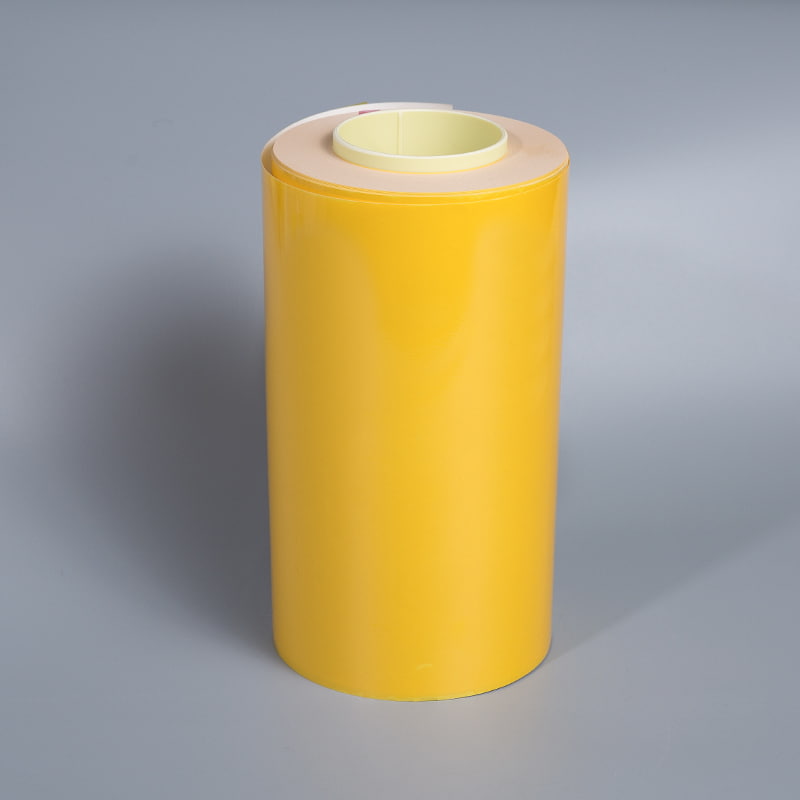
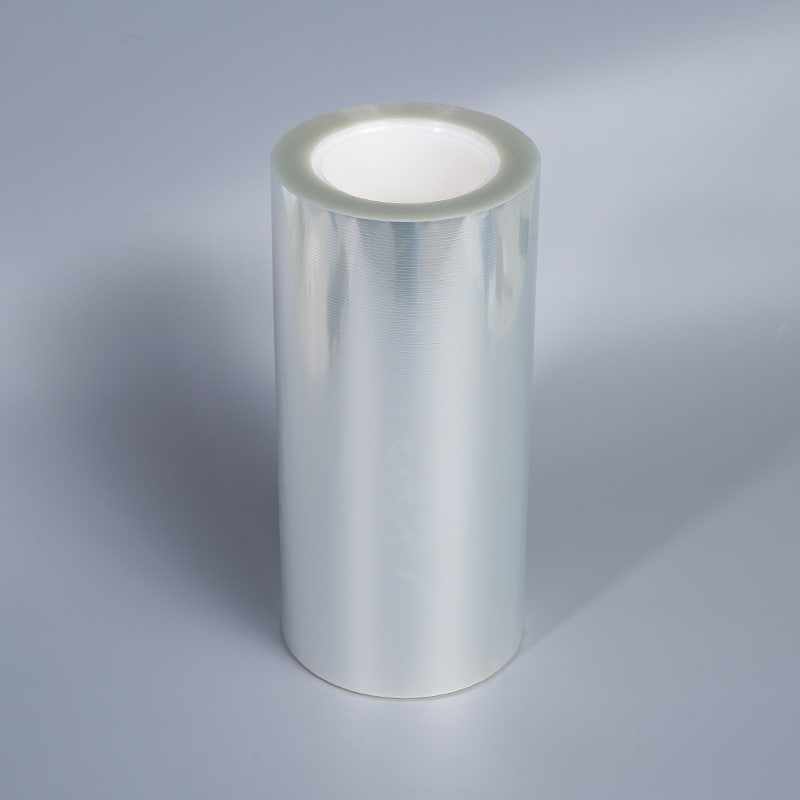
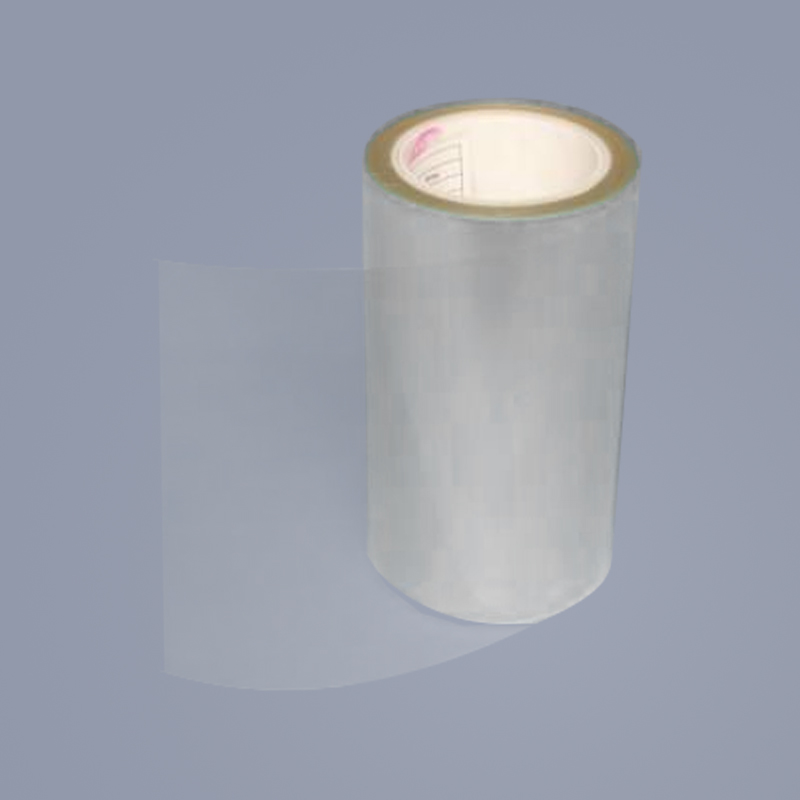
A roll of PET release film looks like a simple sheet of clear polyester, but its surface is a precision-engineered system. A microscopic silicone coating has one job: hold onto an adhesive firmly enough to survive coating, converting, shipping and storage, then let go cleanly when the end user peels the liner away. When that coating is not quite right, the failure rarely appears on the converting line. It appears weeks later, on a label that will not stick, a screen protector that lifts at the corner, or a medical patch that loses tack before it reaches a patient. The residual adhesion rate (RAR) test exists to catch that hidden failure long before it reaches the customer.
What the Residual Adhesion Rate Test Actually Measures
RAR is a percentage that answers one narrow but revealing question: after a standard pressure-sensitive adhesive has been pressed onto a silicone-coated release film and aged, how much of its original tack is still there?
The logic is indirect, and that is exactly why it works. Instead of inspecting the coating directly, the test uses the adhesive as a detector. A clean, well-cured silicone surface releases the adhesive without leaving anything behind, so the adhesive keeps almost all of its grab. A poorly cured or over-coated surface leaves silicone residue on the adhesive, and that residue quietly destroys tack.
RAR (%) = (aged tack of the peeled tape / initial tack of the unexposed control tape) x 100
The control tape is critical. It comes from the same production lot as the test tape, receives the same ageing treatment, but never touches release film. Without it, the number means very little. A result of 100% indicates no measurable transfer. A result of 80% means the adhesive has lost one fifth of its grip, a loss that will almost certainly surface somewhere downstream.
The Test Procedure, Step by Step
Exact parameters vary between laboratories and customer specifications, but most RAR procedures follow the same sequence.
- Cut a clean release film specimen with no creases, contamination, fingerprints or damaged edges.
- Cut a strip of standard reference tape, chosen to match the adhesive chemistry used in the final application.
- Apply the tape to the release surface and press it down with a standard roller, typically 2 kg, using a fixed number of passes.
- Age the assembly under controlled conditions, usually 23 °C and 50% relative humidity for a defined period, or at an elevated temperature such as 70 °C to simulate longer storage.
- Peel the tape from the release film, normally at 180° or 90° and 300 mm per minute. This same peel produces the release force reading.
- Apply the peeled tape to a standard test panel, most often mirror-finish stainless steel or a clean PET plate.
- Wait for a defined dwell time, then peel the tape from the panel. This force is the aged tack.
- Measure the initial tack of the untouched control tape from the same lot, using exactly the same panel, dwell time and peel speed.
- Calculate RAR using the formula above.
Every one of those steps can move the number. That is why RAR values are only comparable across batches when the tape lot, panel surface, ageing profile and peel speed are held constant.
Why RAR Is a Direct Signal of PET Release Film Quality
The quality of a PET release film is really the quality of its silicone coating. RAR turns that into a measurable number because it captures several linked characteristics at once.
- Cure level. Silicone that has not fully cross-linked still contains mobile, low-molecular-weight fractions. These migrate into the adhesive during ageing and reduce its tack.
- Coating weight and uniformity. An excessively heavy coating may transfer silicone even when the release force looks normal. Thin spots transfer locally, which shows up as batch-to-batch scatter in RAR.
- Anchorage to the polyester base. If the coating adheres poorly to the PET substrate, the peel can pull silicone away from the film instead of separating cleanly at the adhesive interface.
- Substrate preparation. Corona treatment or a primer layer helps the coating bond correctly. Insufficient treatment leads to patchy transfer that averages out misleadingly.
- Ageing behaviour. A film that performs well on the day it is made can still drift as silicone migrates slowly over weeks of storage.
Because these factors interact, RAR is often the first number to move when something in coating or curing has drifted, even before release force shows an obvious change.
How To Read RAR Results
Published figures are usually described as guidelines rather than universal limits, because the acceptable threshold depends on the adhesive being protected.
| RAR result | What it usually means | Likely root cause | Practical consequence |
|---|---|---|---|
| 90% and above | Clean release, negligible transfer | Well-cured coating with good anchorage | Suitable for high-speed converting and precision electronics |
| 85% to 89% | Borderline, usually acceptable for mild adhesives | Minor silicone transfer or slight under-cure | Risk of gradual tack loss in long-life or high-tack applications |
| 70% to 84% | Poor, transfer is clearly occurring | Incomplete cure, excessive coating weight, weak anchorage | Labels lifting, corner flagging, secondary bonding failures |
| Below 70% | Unacceptable | Serious contamination, wrong formulation or a processing fault | Batch rejection, customer complaints, rework costs |
These bands are a practical starting point, not a rule. A high-tack rubber adhesive is typically far more sensitive to silicone transfer than a mild acrylic, so the specification limit should be set on the adhesive the customer actually uses, under the ageing conditions the finished product will actually experience.
RAR Is Not the Same as Release Force
Release force measures how hard it is to pull an adhesive away from the release film, usually expressed in grams per inch or newtons per 25 mm. RAR measures how much tack the adhesive has left after that separation. The two values describe different physical events, and they can move independently.
A film can deliver a perfectly stable, easy release and still fail RAR, because the coating transfers silicone while separating smoothly. The opposite also happens: a release force that drifts upward is often the first warning of a coating problem, and RAR will usually confirm it. Reading both numbers together is what makes the pair useful. Buyers who need to set release force specifications alongside thickness and purchase tolerances can find a useful reference in this guide to PET release film release force, thickness and sourcing specifications.
Variables That Skew RAR Results
Two laboratories can test the same roll of film and report very different RAR values. Before drawing any conclusion from a single result, check that the following were controlled.
- Ageing time and temperature. Longer and warmer ageing almost always lowers RAR, because transfer is both time and temperature dependent.
- Peel angle and speed. A 180° peel and a 90° peel load the interface differently, and faster peeling changes the measured force.
- Test tape lot and chemistry. Different adhesives have very different sensitivity to silicone, and different production lots of the same reference tape can vary.
- Roller pressure and dwell time. More pressure and longer contact increase the area of intimate contact and therefore the amount of transfer.
- Relative humidity. High humidity can plasticise some adhesives and change both release and residual tack.
- Panel condition. Reused or contaminated stainless steel panels give inconsistent results, so they should be cleaned or replaced on a schedule.
- Dwell time on the test panel. The adhesive needs a defined wetting period before peeling, and shortening it inflates the measured force.
Which Standards and Specifications To Reference
Silicone transfer testing is rarely standardised as a single standalone method. In practice, RAR appears in a customer specification as an additional check, while the underlying adhesion measurements follow published procedures such as ASTM D3330 or PSTC-101 for pressure-sensitive tape peel adhesion, and the FINAT FTM series for release liner measurement.
Many converters go further and define an internal method on top of those references. That internal document fixes the reference tape brand and grade, the roller weight and pass count, the ageing profile, the test panel material, the dwell time and the peel speed. Once that document exists, RAR becomes a repeatable, auditable number rather than an occasional experiment.
Using RAR in Incoming Inspection and Supplier Qualification
For a factory that buys PET release film, RAR is less a one-off acceptance test and more a monitoring tool. The following practices turn it into something genuinely useful.
- Establish a reference RAR value during supplier qualification, not after the first complaint.
- Reserve a fixed batch of control tape and use it consistently across every comparison.
- Track RAR and release force on the same chart, so that a slow drift becomes visible before it becomes a defect.
- Retain a sealed sample of every incoming lot so that any later claim can be re-tested under identical conditions.
- Retest suspect lots after accelerated ageing, which usually amplifies a marginal transfer problem into a clear one.
Qualification also involves choosing a coating system that behaves consistently from batch to batch. When a supplier can document stable silicone chemistry and traceable release grades, the RAR number stops moving unpredictably and incoming inspection becomes a confirmation step rather than a guessing game.
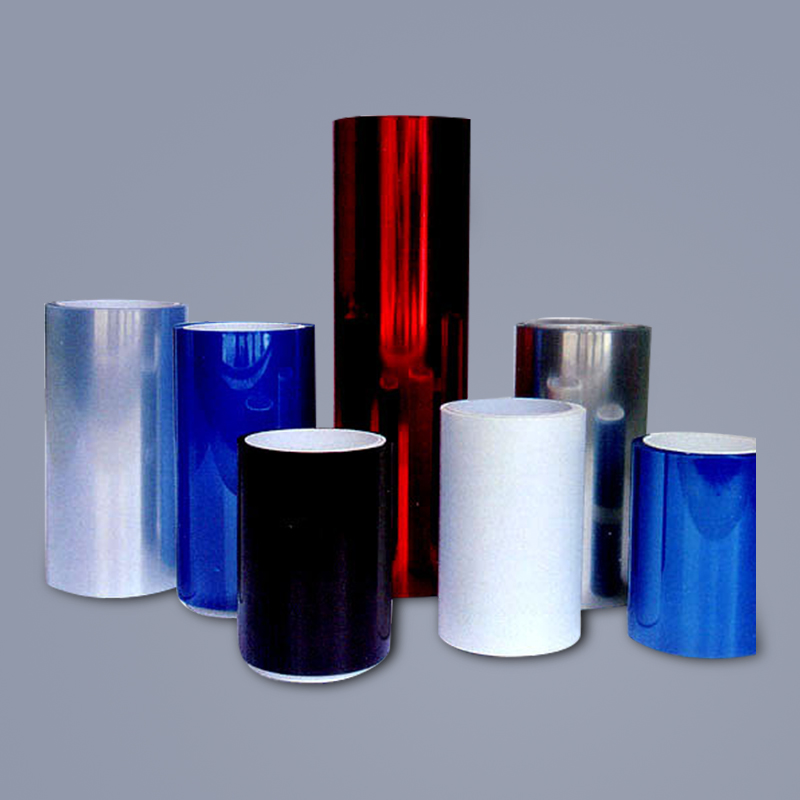
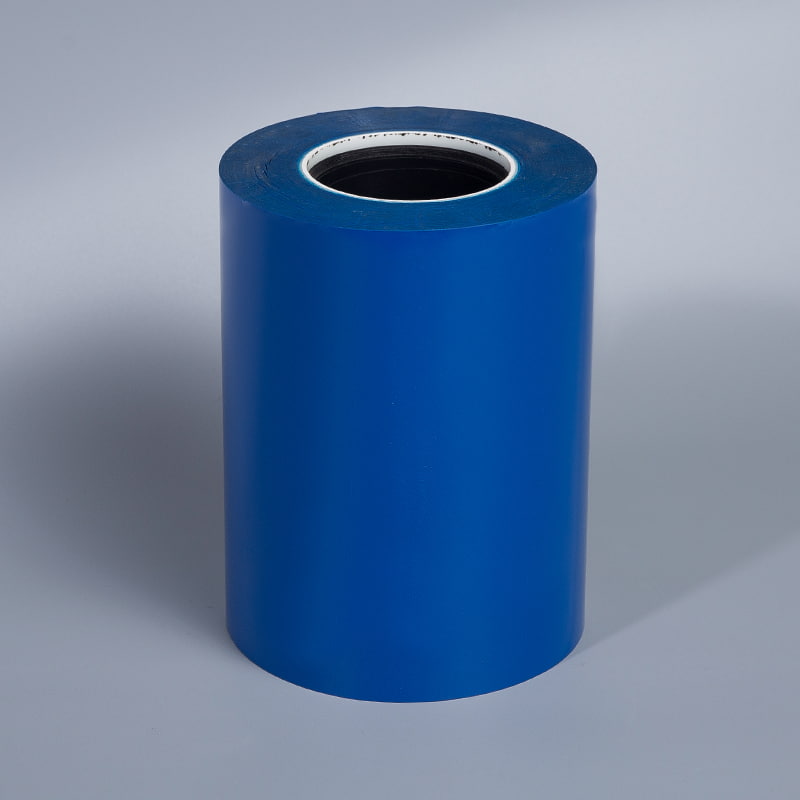 PET Release Film Category for Adhesive, Die-Cutting, and Electronics UsesCompare PET release film constructions with silicone coating options, 12–100um thickness, multiple colors, and release grades for adhesive and die-cutting evaluations.View Product →
Converters who want to evaluate a specific substrate against their own adhesive should begin with a defined PET release film construction and run it through their real ageing profile before committing to a specification.
Frequently Asked Questions
Q1: What RAR value is considered good?
For most acrylic adhesives, 90% or above is regarded as excellent and 85% is often treated as the acceptable floor. High-tack rubber adhesives may need a tighter limit, so the safest approach is to establish your own baseline on your own adhesive before setting a specification.
Q2: Does a low RAR always mean the release film is defective?
No. An expired or degraded test tape, the wrong ageing conditions, or a contaminated test panel can all push the result down. Ruling out those variables first prevents a good batch from being rejected for the wrong reason.
Q3: How long does a full RAR test take?
A short standard ageing cycle can produce a number in about twenty minutes. Most specifications, however, call for 24 hours at 23 °C and 50% relative humidity, or an accelerated cycle at elevated temperature, so a realistic turnaround is one to four days.
Q4: Can RAR be used to evaluate paper-based release liners?
Yes. The principle is independent of the substrate, so coated paper release liner, Gracin release paper and PET release film can all be tested with the same sequence. Paper-based materials do absorb moisture, so peel conditions and storage history need tighter control.
Q5: If release force is good, does that guarantee a good RAR?
No. Release force and RAR describe different events at the interface. An over-coated film can release smoothly while still depositing silicone on the adhesive, so a comfortable release force is not evidence that the coating is properly cured.
RAR is not a glamorous test. It takes a day, it needs a reference tape that nobody enjoys sourcing, and it produces a single percentage that can look unremarkable at first glance. But that percentage is often the only early warning a converter gets before a batch of release film starts sabotaging adhesive performance somewhere down the line. Treat the number as a trend rather than a pass or fail stamp, control the conditions around it, and it will tell you more about coating consistency than almost any other routine check performed at the incoming dock.