 En
 中文简体


Article Directory
- 1 Why Glassine Release Paper Is So Sensitive to Storage Conditions
- 2 What Actually Happens Inside a Roll During Storage
- 3 How Curl and Moisture Show Up Downstream
- 4 Storage Conditions That Prevent Curling and Moisture Absorption
- 5 What to Do With Roll Stock That Has Already Picked Up Moisture
- 6 Choosing a Release Liner That Survives Real-World Storage
- 7 FAQ: Glassine Release Paper in Storage
- 7.0.1 Q1: What humidity should glassine release paper be stored at?
- 7.0.2 Q2: Why does my liner curl at the edges even though the roll is still wrapped?
- 7.0.3 Q3: Can curled release paper be recovered?
- 7.0.4 Q4: Does the silicone coating stop the paper from absorbing moisture?
- 7.0.5 Q5: How long can glassine release paper be stored?
Glassine release paper looks like a simple material: a dense, supercalendered paper with a thin silicone coating on one face. In storage it becomes something more complicated. It is a hygroscopic sheet coated on only one side, wound under tension into a tight roll, and then expected to stay flat, clean and dimensionally stable for months at a time. Those conditions are exactly why curling and moisture absorption remain two of the most frequent complaints from label converters, die-cutters and medical patch producers who open a roll after weeks in the warehouse.
This article explains what happens inside a roll of glassine liner during storage, how to recognise the warning signs early, and which storage, handling and material decisions actually keep curl and moisture uptake under control.
Why Glassine Release Paper Is So Sensitive to Storage Conditions
Glassine paper is produced by refining pulp heavily and then supercalendering it until the fibres are compressed into a dense, translucent, low-porosity sheet. That density is what gives the material its smooth surface, high transparency and grease resistance, and it is why glassine liners are chosen for medical patch papers, clear-on-clear labels and other applications where the liner has to be almost invisible.
The same density works against the material inside a warehouse. Paper fibres are hygroscopic: they take up water vapour from the surrounding air, swell, and release it again when the air dries out. The silicone coating on the release side is hydrophobic, so the coated face absorbs far less moisture than the bare paper face. When relative humidity climbs, the two faces swell by different amounts. The uncoated side grows, the coated side resists, and the sheet has nowhere to move but into a curl.
Paper also does not swell evenly in both directions. Fibres swell much more across the web than along it, so distortion usually appears as cross-direction curl and lifted edges rather than a uniform dome. In sheet form the result is a liner that will not lie flat. In roll form, the effect stays hidden inside the wind until the roll is finally unwound on a press or a die-cutter.
Liners in this family are built to keep that balance as even as possible. High-transparency grades such as Gracin release paper are produced with controlled calendering and a silicone cure that limits the difference in behaviour between the two faces, but no liner can compensate for a warehouse that swings between extremes.
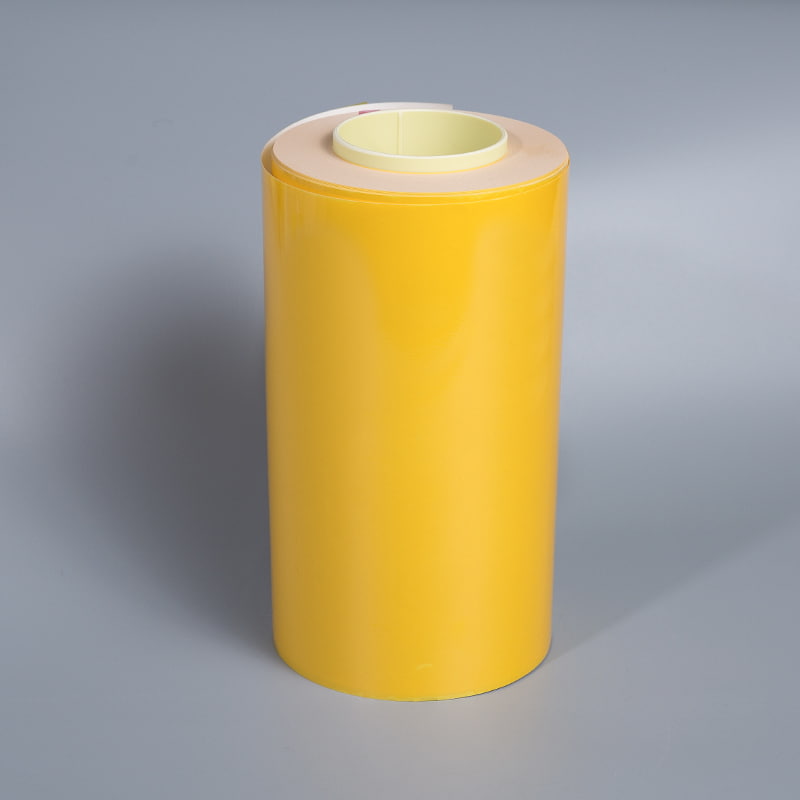
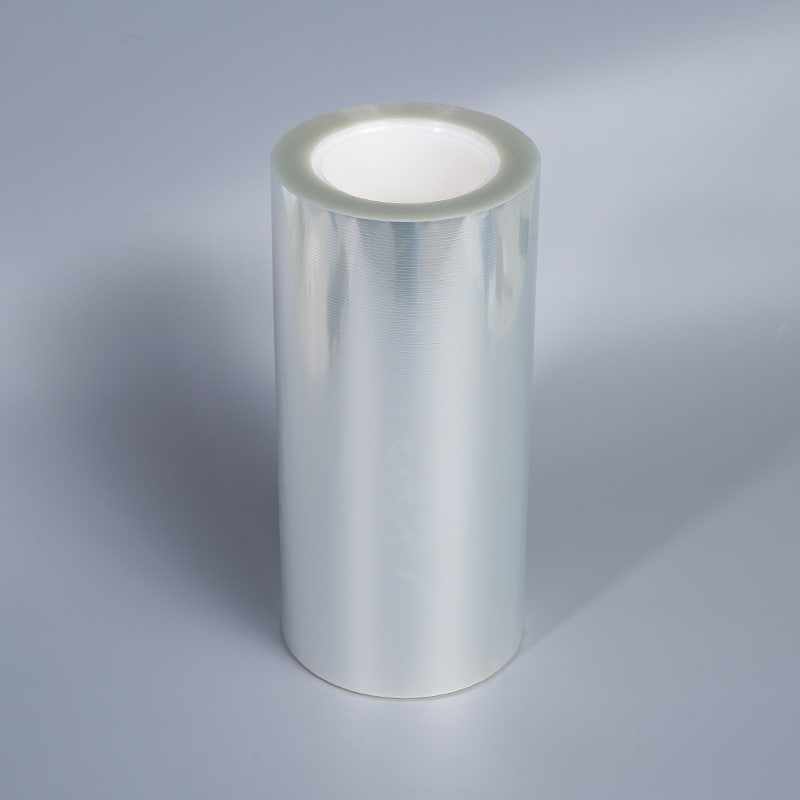
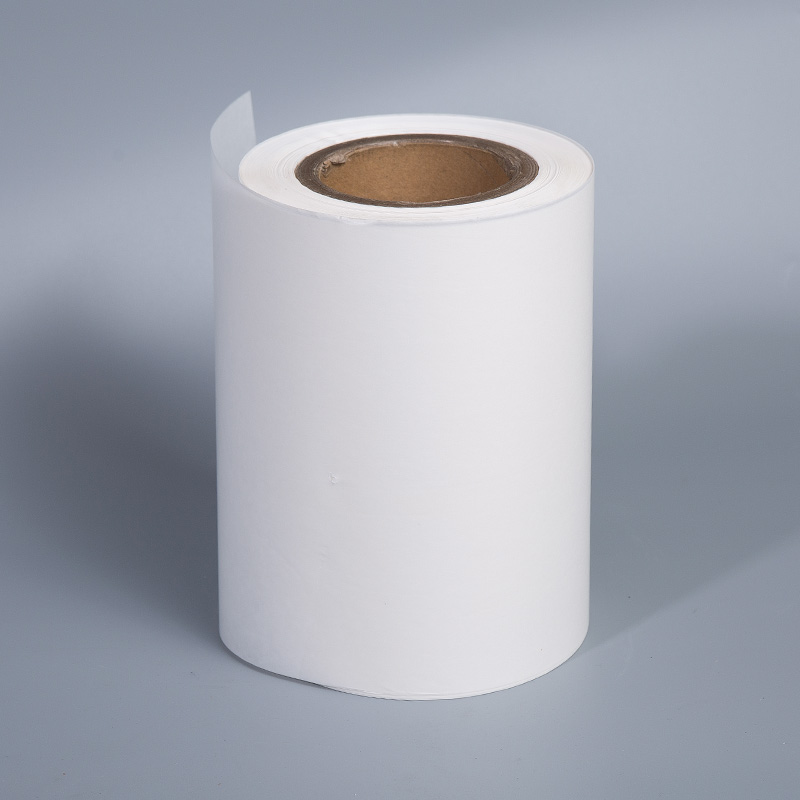 Glassine Release Paper for Labels, Tapes, Medical and Die-CuttingHigh-transparency glassine liner family with silicone coating options, multiple colors and 40–120gsm grades for label, tape and die-cutting uses.View Product →
What Actually Happens Inside a Roll During Storage
Storage damage rarely starts on the surface you can see. It develops at different rates in different parts of the roll, which is what makes it so difficult to reverse once it has set in.
Edges and outer wraps gain moisture first
The exposed edges and outer wraps of a roll are in direct contact with the air; the core is not. In a humid room the outer layers swell while the tightly wound core stays dry, so the roll can physically grow in diameter, the wraps loosen, and the edges begin to wave. When the roll is unwound, those waves appear as cockle, wrinkles and baggy edges that ruin registration and tension control.
Temperature swings add condensation to the equation
Temperature is the second half of the problem. A roll moved from a cold container or an unheated store into a warm, humid converting hall will collect condensation on the coolest surface available, which is the silicone face. Water marks, a hazy appearance and drifted release force are the usual outcomes. Rapid temperature changes also create stress between the paper and the coating, because the two materials expand and contract at different rates.
Winding tension and stack pressure lock the distortion in
A roll is a spring. Winding tension holds the layers together, and pallet stacking adds compression from above. When the paper tries to swell inside that constraint, the stress has nowhere to dissipate and gradually becomes permanent. This is how blocking, pressure marks and washboard patterns are created, long before the roll ever reaches a converting line.
Time makes every effect more permanent
None of these processes is instantaneous. Moisture moves slowly through a densely wound roll, and the silicone chemistry continues to interact with the adhesive it protects. A liner stored for six months in a poor environment will not behave like the same liner stored for two weeks, even when both rolls look identical from the outside.
| Storage factor | What it does to the liner | Typical early sign |
|---|---|---|
| High relative humidity | Uneven swelling between coated and uncoated faces | Edge curl, cockle, wavy roll edges |
| Fluctuating temperature | Condensation plus differential expansion of paper and coating | Water marks, haze, release force drift |
| Stack pressure and winding tension | Traps swelling stress inside the roll structure | Blocking, pressure marks, washboard |
| Long storage time | Slow moisture migration and adhesive interaction | Tight or inconsistent release, liner pick |
How Curl and Moisture Show Up Downstream
Because the damage happens quietly, the first sign is usually a production problem rather than a visible defect on the roll. The most common consequences include:
- Web handling faults: a curled liner will not track straight, so the web flutters, wanders and loses register as it leaves the unwind.
- Release force drift: absorbed moisture changes the effective surface energy of the silicone, pushing release force up into tight release or down into premature adhesive transfer.
- Die-cutting and matrix stripping faults: a wavy or swollen liner changes the depth relationship between die, label and liner, producing nicks, hanging matrix and incomplete cuts.
- Printing and decoration defects: when the liner is printed, cockle and uneven tension cause misregistration and mottled ink lay.
- Dispensing failures: label applicators that run at high speed are unforgiving of liner curl, and jams at the peeler plate are a classic symptom of moisture uptake.
- Medical and hygiene rejects: patch papers and hygiene products demand flat, clean release surfaces, and small curls translate directly into customer complaints.
Storage Conditions That Prevent Curling and Moisture Absorption
Most curl and moisture problems are preventable with disciplined warehouse conditions. The ranges below are the practical targets for paper-based release liners; the closer a store stays to the middle of each range, the more stable the liner will remain.
| Parameter | Recommended target | Why it matters |
|---|---|---|
| Temperature | 20–25 °C, ±3 °C | Keeps paper near its conditioned state and limits condensation |
| Relative humidity | 45–55% RH | Balances moisture uptake against fibre swelling |
| Packaging | Keep the original polyethylene-coated or foil-laminated wrap in place | Blocks vapour exchange with room air |
| Acclimatisation | 24–48 hours in the converting area before opening | Prevents condensation forming on a cold silicone face |
| Pallet position | Off the floor, at least 100 mm from walls, away from doors and dock openings | Avoids damp surfaces and draughts of humid outside air |
| Stack height | Limit to the roll supplier’s recommendation | Reduces compression stress that locks in distortion |
Handling habits that matter as much as the room
- Never open a wrapped roll while it is still cold; let it reach room temperature first.
- Store rolls horizontally on a clean pallet or vertically on racks with end support, and never let a roll rest on a single edge.
- Rewrap partially used rolls immediately, including the exposed edges.
- Keep stock away from heaters, skylights, direct sunlight and dock doors.
- Rotate stock on a first-in, first-out basis so nothing sits at the back of the store for a year.
- Log temperature and humidity continuously; a data logger is cheaper than a rejected batch.
Because release force itself responds to temperature and humidity, a storage log is often more useful than a visual inspection when a batch starts to misbehave. Understanding how release paper rolls respond to humidity and temperature helps you separate a genuine material issue from an environmental one before you blame the adhesive.
What to Do With Roll Stock That Has Already Picked Up Moisture
If a batch has already been exposed, the situation is not automatically lost. Work through these steps before deciding whether to scrap the rolls.
- Stop converting and isolate the rolls. Move them into a controlled room at 23 °C and 50% RH, and leave them wrapped for at least 24 to 48 hours so the moisture profile can even out.
- Inspect properly. Unwind five to ten metres and look for cockle, edge lift, blocking and pressure marks rather than judging the outer wrap.
- Run a curl test. Cut a 100 mm by 100 mm square, place it on a flat surface in conditioned air, and measure corner lift after five minutes and again after sixty minutes. Record both numbers, because the change over time tells you whether the sheet is still equilibrating.
- Measure release force. Use a standard peel test at controlled speed and angle instead of judging release by hand; hand feel is the least reliable instrument in the plant.
- Re-wrap and re-stack. Reduce stack height and keep the recovered rolls at the front of the queue so they are used first.
- Re-grade rather than scrap. Rolls with mild curl may still be acceptable for less critical, slower-running jobs where registration tolerances are wider.
Choosing a Release Liner That Survives Real-World Storage
Storage discipline solves most of the problem, but material choice sets the ceiling on how much abuse a liner can take. Two families behave very differently over a long storage period.
Silicone-coated PET release film
Polyester film does not behave like paper in a humid room. PET takes up almost no moisture, so it has no fibre-swelling mechanism to drive curl and no cross-direction expansion to distort the web. For applications where a liner may sit in a warehouse or a customer’s store for months before use, a film liner removes the paper moisture problem altogether, and it also holds caliper and flatness far more consistently under temperature cycling.
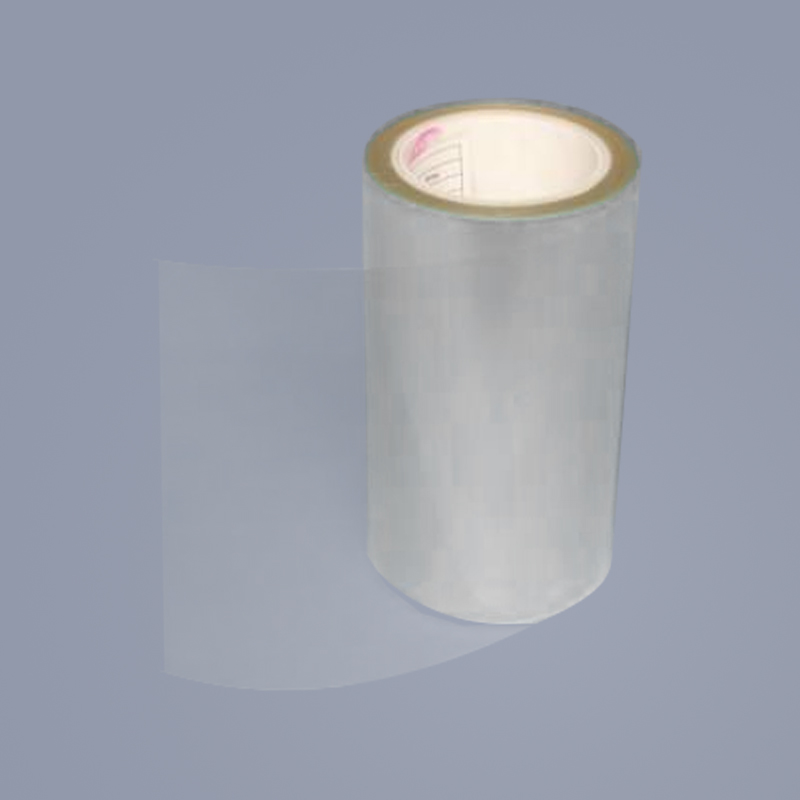
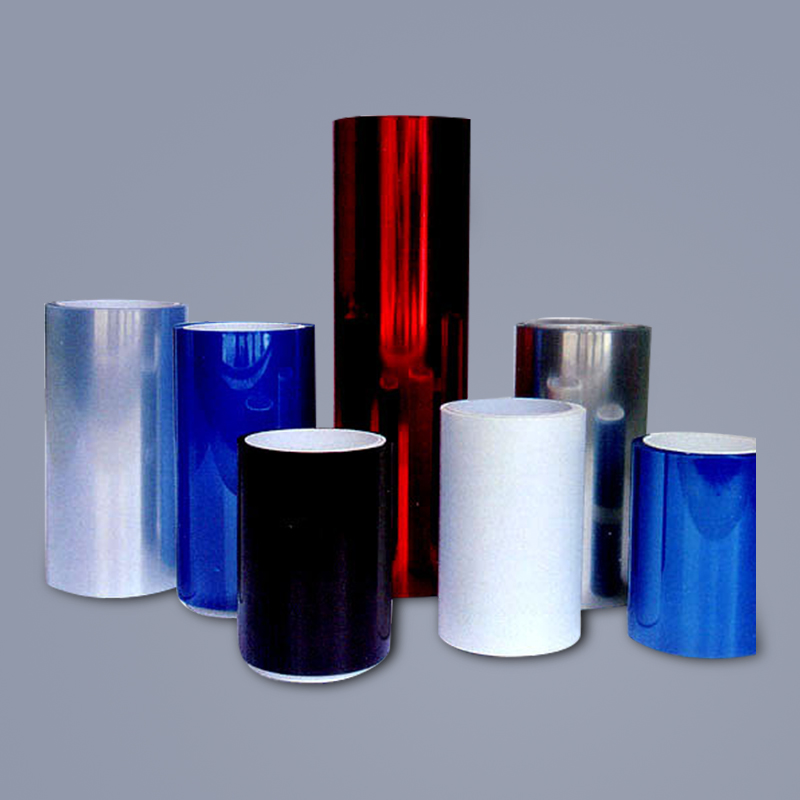
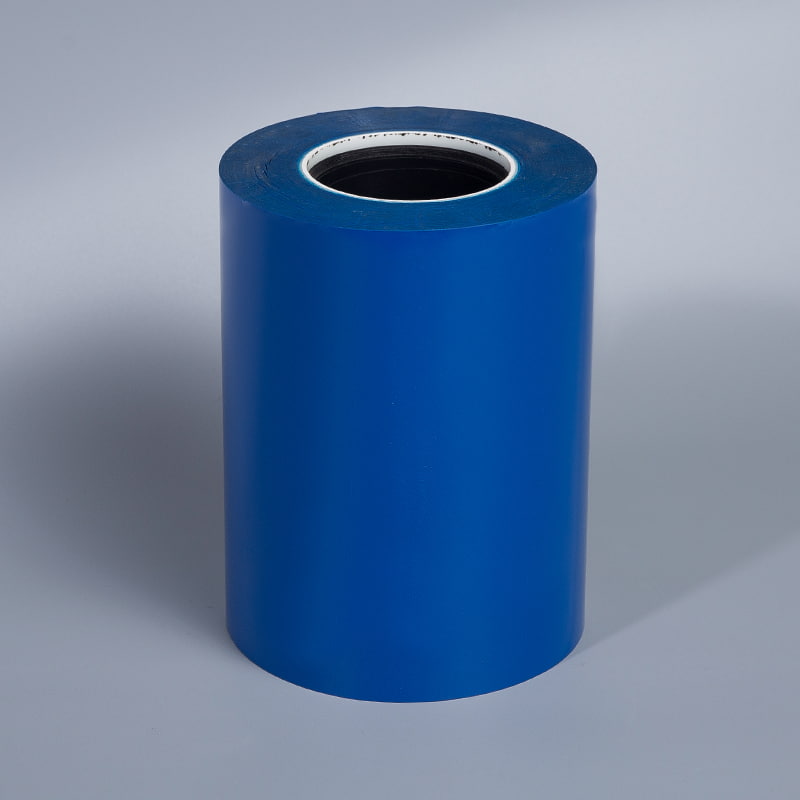 PET Release Film for Die-Cutting, Electronics and PrintingSilicone-coated PET film with stable release, flatness and transparency, offered in multiple colors from 12um to 100um.View Product →
Paper liners with balanced construction
Where a paper liner is required for cost, stiffness or converting behaviour, choose a grade whose coated and uncoated faces are as balanced as possible, and specify the storage conditions you can actually maintain rather than the conditions you would like to have. It is also worth discussing your application with the supplier before ordering, because coating weight, silicone cure and base paper formation all influence how quickly a liner reacts to moisture.
Working with a manufacturer that understands how a liner behaves after six months in a warehouse matters as much as the specification on paper. Anhui Hengbo New Material Co., Ltd. supplies PET film, PET release film and protective film for printing, electronics, medical, adhesive and die-cutting applications, and answers technical questions about storage and conditioning as part of the order process.
FAQ: Glassine Release Paper in Storage
Q1: What humidity should glassine release paper be stored at?
Aim for 45–55% relative humidity at 20–25 °C. Below 45% the paper can dry out and become brittle, while above 55% the uncoated face begins to swell noticeably faster than the coated face, which is the beginning of curl.
Q2: Why does my liner curl at the edges even though the roll is still wrapped?
Most wraps slow vapour exchange rather than stop it, and the exposed roll edges are always the weakest point. If a pallet sits near a dock door or against an external wall, the edges of every roll can pick up moisture while the core stays dry.
Q3: Can curled release paper be recovered?
Mild curl often relaxes after 24 to 48 hours of conditioning in a controlled room at 50% RH. Severe blocking, washboard marks and permanent pressure marks cannot be reversed, because the stress has already been locked into the fibre structure.
Q4: Does the silicone coating stop the paper from absorbing moisture?
No. Silicone is hydrophobic, so the coated face absorbs much less moisture than the bare face, but that difference is exactly what creates the curl. A one-sided barrier guarantees an unbalanced response to humidity.
Q5: How long can glassine release paper be stored?
There is no universal shelf life. In a well-controlled store, rolls commonly remain usable for twelve months or more, while the same product in an uncontrolled warehouse can show measurable release force drift within a few weeks. First-in, first-out rotation remains the simplest safeguard.
Curling and moisture absorption in glassine release paper are not random events. They are the predictable result of a hygroscopic, one-sided coated sheet being stored in an environment that changes faster than the roll can adapt. Control the temperature, hold humidity near 50%, keep the wrap intact, let cold rolls acclimatise before opening them, and the liner you unwrap next month will behave exactly like the one you tested on arrival.