 En
En  中文简体
中文简体 西班牙语
西班牙语

Article Directory
Your kiss-cut dies stall on the tenth rewind because the liner stretched 2 mm across the web. A fresh roll of labels locks up after a humid week in the warehouse. Before you re-engineer the die or switch adhesives, look at the release liner carrying the job. The decision - PET release film vs glassine release paper - comes down to measurable trade-offs: PET film resists moisture, holds tight tolerances, and converts fast; glassine paper costs less, prints well, and fits paper recycling streams. This article compares both liners on the properties that cause actual production failures, then gives you a selection method that prevents surprises.
Values above are typical reference points from industry literature. Your actual numbers depend on the silicone coating, the adhesive chemistry, and the supplier's process control.
What Separates PET Release Film from Glassine Release Paper?
PET release film and glassine release paper differ above all in how they respond to moisture and mechanical load: PET film changes dimension by fractions of a percent, while glassine absorbs water and swells, shifting release force, die-cut geometry, and web flatness.
PET release film: engineered stability
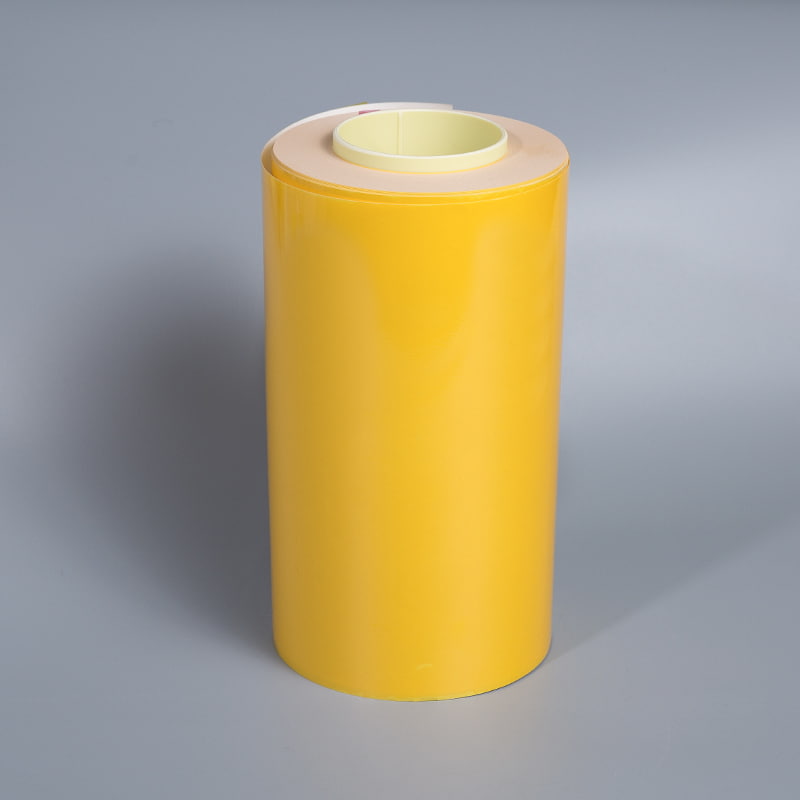
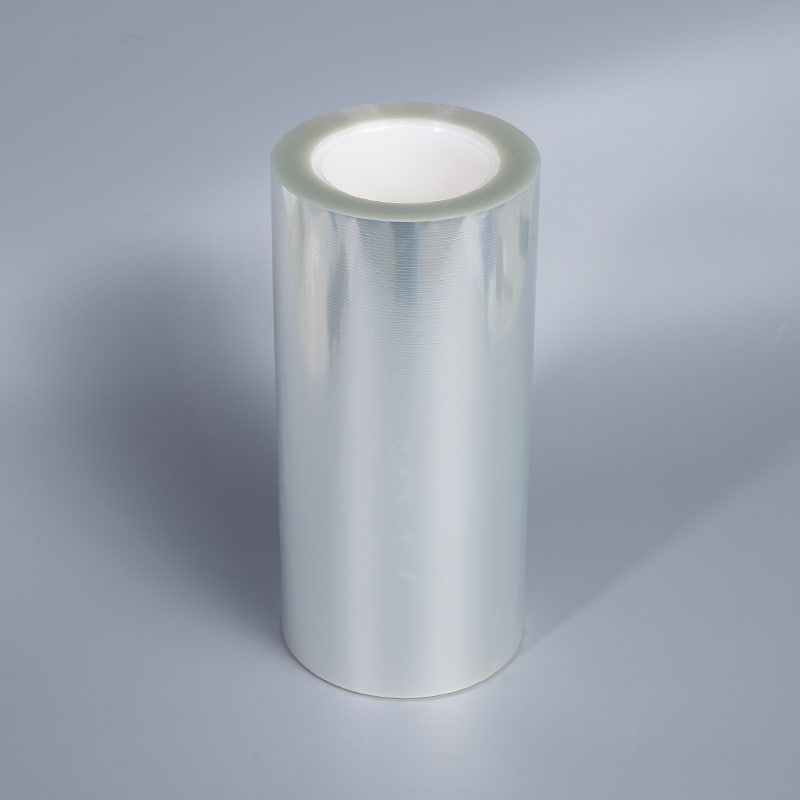
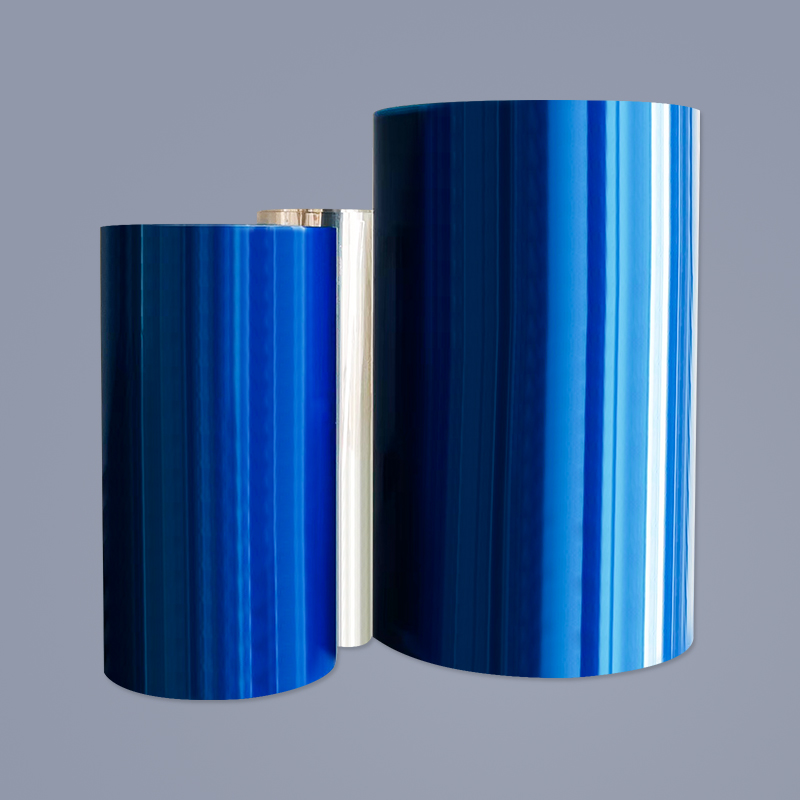
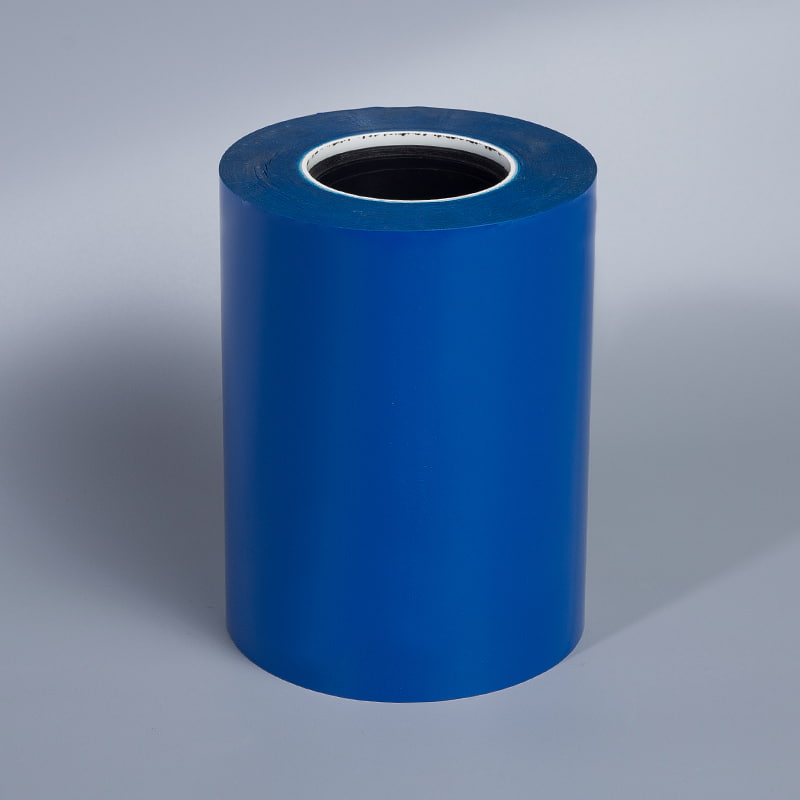
PET release film starts as a biaxially oriented polyester film, 12 to 50 micron thick, coated on one or both sides with solvent, water-based, or solventless silicone. Tensile strength sits in the 150 to 250 N/25 mm range, elongation stays low, and moisture absorption measures below 0.3 percent, so the web keeps its geometry through printing, slitting, and die-cutting. Release force can be engineered from about 5 g/25 mm for gentle medical tapes to more than 400 g/25 mm for heavy rubber adhesives. Anhui Hengbo New Material Co., Ltd., which has manufactured polyester film products for roughly 20 years, supplies PET release film in custom widths to label, electronics, medical, and die-cutting converters.
Glassine release paper: dense, smooth, economical
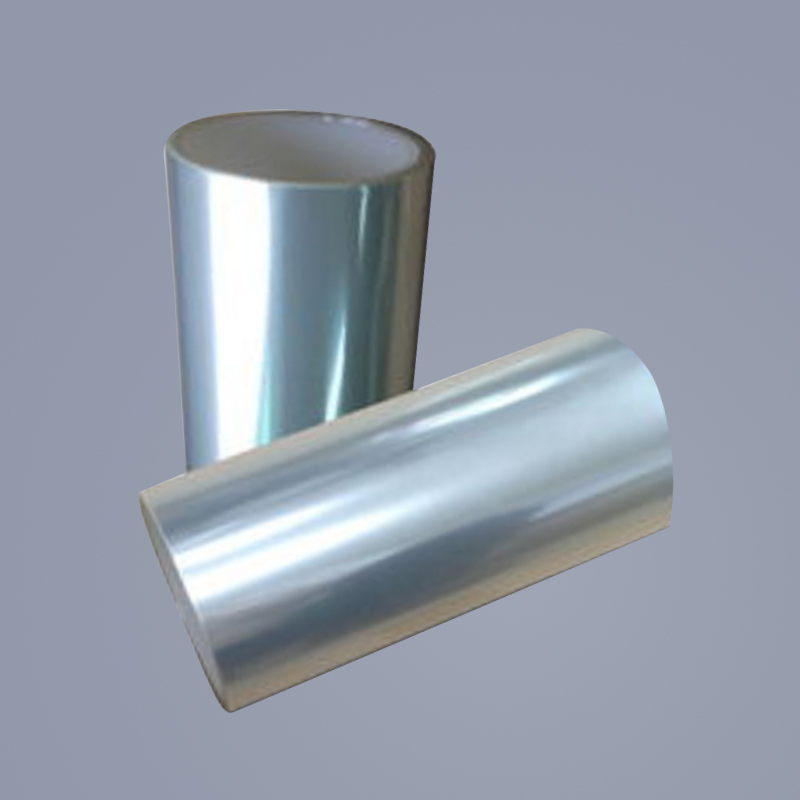
Glassine release paper is a highly hydrated kraft sheet that passes through super-calendering rolls, which compress it into a dense, smooth, translucent substrate with a closed surface. Common basis weights span 55 to 120 g/m2. Coated with silicone, glassine runs cleanly inside a dry, air-conditioned environment, accepts back-side printing, and costs roughly 30 to 50 percent less per square meter than an equivalent PET construction. For short runs and controlled humidity, it remains the economical choice.
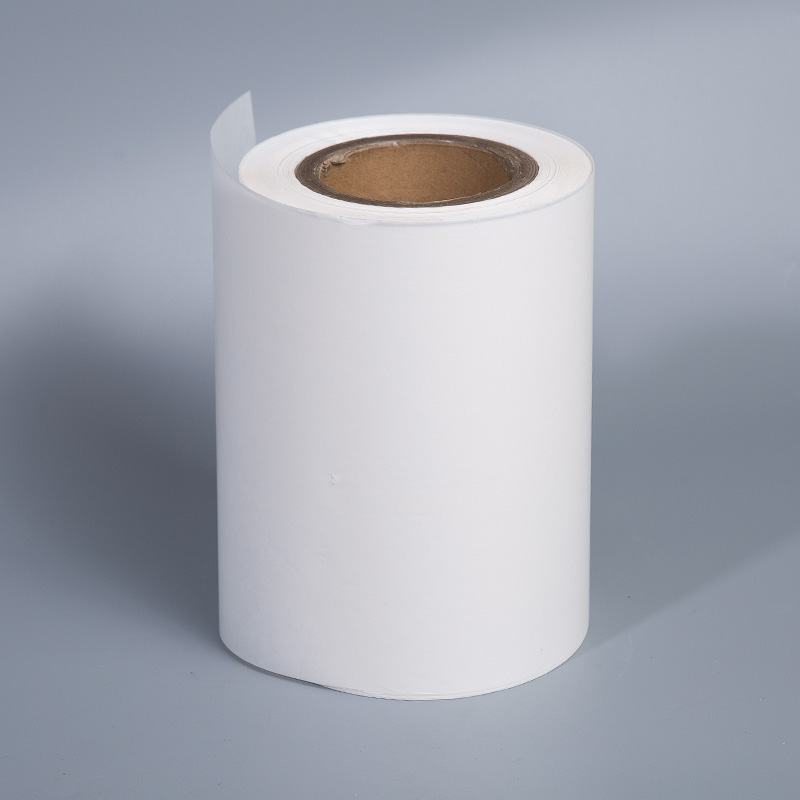
Glassine belongs to this dense, translucent paper family with a tight, low-porosity coated surface for demanding paper-liner work.
| Property | PET Release Film | Glassine Release Paper |
|---|---|---|
| Thickness / basis weight | 12-50 micron | 55-120 g/m2 |
| Moisture absorption (24 h, 50% RH) | 0.1-0.3% | 5-8% |
| Dimensional change (24 h, 90% RH) | 0.05-0.1% | 0.8-1.5% |
| Tensile strength | 150-250 N/25 mm | 60-90 N/25 mm |
| Release force range | 5-500 g/25 mm | 10-300 g/25 mm |
| Continuous service temperature | -40 to 200 deg C | up to 120 deg C |
| Typical die-cutting speed | 90-120 m/min | 60-80 m/min |
| Relative unit cost | 1.5-2.5x glassine | baseline |
| Main waste route | PET film recycling streams | repulping and paper recycling |
These are starting points, not guarantees. Every supplier measures differently, so confirm release force values against the adhesive supplier's recommended window before committing a specification.
PET Release Film vs Glassine Release Paper: Die-Cutting and Stability
For die-cutting and dimensional stability, PET release film outruns glassine release paper in every high-humidity or high-speed scenario, because the film has no fiber network that swells when water enters the web.
What happens at 90 percent relative humidity
Paper liners exchange moisture with the air quickly. At 90% RH, glassine absorbs 5 to 8 percent water, fibers expand, web width creeps, and the silicone coating, which does not pick up water, resists that expansion unevenly, producing curl. PET release film absorbs under 0.3 percent under identical conditions and holds width within about 0.1 percent. Dies that hold a 0.1 mm tolerance in a conditioned lab can drift by a full tool width on glassine when the same job moves to a humid shop floor. For die-cutting, matrix stripping, and automatic dispensing, this is the single largest difference between the two liners.
Moisture response and tensile strength: where the liners divide
Bars are scaled within each metric group; values are typical and supplier-dependent.
Release force consistency across the roll
Glassine's fiber structure gives silicone a different anchoring surface in the machine direction than across the web, so release force varies by direction and position. PET film presents a flat, non-porous surface, the silicone cures evenly, and release values hold a tighter spread. Automatic applicators, high-speed labeling, and tape slitting all benefit from that consistency. If your process needs the full technical dataset, our notes on release force, thickness, and sourcing specifications cover the testing protocol in detail.
PET Release Film vs Glassine Release Paper: Cost and Sustainability
Glassine release paper wins when purchase price or paper recyclability dominates the decision, while PET release film wins when yield, scrap, and field reliability define the real cost.
Two directions, two cost logics
Choose glassine release paper when
- Line speeds stay under roughly 60-80 m/min
- The production environment stays below 60% RH
- Labels end up on flat, dry, indoor products
- Paper recycling or repulping is the planned waste route
- Back-side printing on the liner is required
Choose PET release film when
- Rotary die-cutting runs fast or web breaks are costly
- Production or storage humidity is uncontrolled
- Die-cut tolerance must hold for multi-layer or filmic constructions
- Cleanroom or medical-grade cleanliness is required
- Release force needs a tight direction-to-direction spread
The effective cost per good square meter
A 30-50 percent price gap at purchase does not survive contact with scrap. A glassine liner that costs less per roll but breaks the matrix twice per shift, curls in storage, or causes field returns has spent its advantage before the roll finishes. Converters who track cost per good finished unit typically find the two materials land much closer than the roll price suggests.
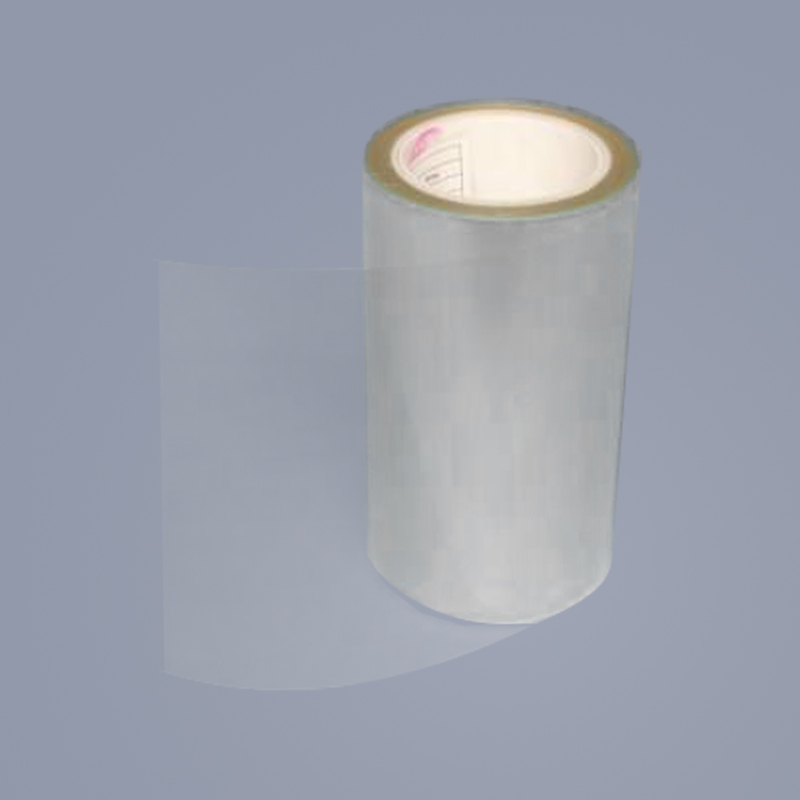
Applications that want paper's recyclability with better flatness than standard glassine can use Copperplate Paper Release Paper, which carries a coated, denser surface and sits between plain glassine and PET film in both price and dimensional control.
Application-by-Application Selection Guide
Match the release liner to the converting process first and the end-use environment second; the matrix below converts the comparison into a shortlist.
| Application | Recommended liner | Why it wins |
|---|---|---|
| Beverage and personal-care labels | PET release film | High-speed dispensers, cold and wet environments, curl control |
| Medical plasters and patches | PET release film | Cleanroom tolerance, die-cut precision, low extractables |
| Cosmetic labels, short runs | Glassine release paper | Lowest applied cost, back-side printing, sufficient indoor stability |
| Adhesive tapes, thin calipers | PET release film | Planar surface prevents telescoping and air traps |
| Logistics and price-sensitive labels | Glassine release paper | Flat, dry usage, paper recycling route, wide availability |
| Electronics and flexible circuit lamination | PET release film | No fibers, elevated temperature resistance, controlled release |
A three-step selection method
- Define the release-force window. Ask the adhesive supplier for the recommended peel force at the intended liner removal speed, then choose a coating inside that window with margin in both directions.
- Verify dimensional response. Condition 300 mm square samples at 60%, 80%, and 90% RH for 24 hours and measure width change. Any liner moving more than 0.3% needs careful humidity control or a film substrate.
- Run a production-speed trial. Die-cut a full roll at line speed, record kiss-cut depth every 500 m, count web breaks and matrix tears, and compare scrap against the incumbent liner.
Release Liner FAQ
Can you run glassine release paper on a high-speed rotary die cutter?
Yes, up to roughly 60 to 80 m/min in dry conditions. Above that speed, thickness variation and fiber stretch widen the kiss-cut depth and increase matrix breakage. PET release film is the standard answer for sustained high-speed converting.
Is PET release film recyclable?
PET film is recyclable through dedicated polyester collection and reclamation routes, but it will not repulp in a paper mill. If your customers separate liner waste, ask the waste handler whether PET film is accepted; otherwise glassine release paper has an easier end-of-life path.
Why does glassine cost less than PET release film?
Paper starts from a lower-cost fiber base and runs on simpler coating lines. The gap is typically 30 to 50 percent on a square-meter basis, before scrap, web stops, and field returns are added to the true cost per good finished unit.
How should I compare release force between the two liners?
Use the same test tape, peel angle, speed, and conditioning for both. A standard protocol is 180-degree peel at 300 mm/min after 24 hours at 23 deg C and 50% RH; measure machine direction and cross direction separately, then repeat after a humidity soak at 80% RH.