 En
En  中文简体
中文简体 西班牙语
西班牙语

Article Directory
- 1 What separates glassine release paper from a standard Kraft liner at the fiber level?
- 2 Why glassine release paper beats Kraft on release-force consistency
- 3 Die-cutting and matrix stripping: where Kraft compressibility costs more than glassine
- 4 Moisture and caliper stability: glassine release paper versus Kraft under pressroom stress
- 5 Cost per roll versus cost per defect: how glassine release paper beats Kraft on yield
- 6 FAQ: glassine release paper and Kraft liners in label production
A pressure-sensitive label line running at 150 meters per minute gives the release liner less than half a second to separate cleanly, hold its caliper under rotary die-cutting pressure, and peel away as matrix without tearing the label face. Standard Kraft liners fail that test often enough that converters serving automotive, pharmaceutical and industrial label accounts quietly move their high-volume work to glassine. The reasons are measurable: release-force stability, dimensional behavior under heat and humidity, and the scrap rate per 100,000 labels. That is why high-volume label manufacturers prefer glassine release paper over standard Kraft paper liners in pressure-rated and automated converting lines.
What separates glassine release paper from a standard Kraft liner at the fiber level?
Glassine release paper is a supercalendered pulp sheet whose fiber matrix is compressed to near-film density; a standard Kraft liner keeps an open, porous fiber structure with visible surface roughness. That one structural difference drives every performance gap between the two materials.
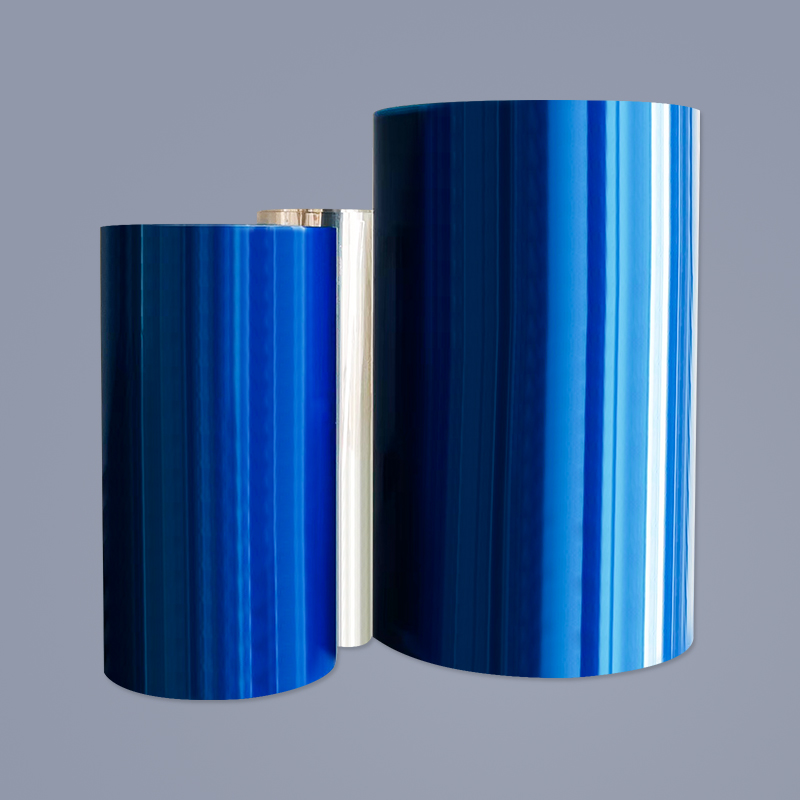
Kraft liners are made on conventional paper machines and are usually only machine-glazed. The surface contains fiber bundles, micro-valleys and pinholes that a silicone coating reveals immediately: the emulsion pools in valleys and dewets at fiber crests, leaving a coating that varies in thickness by several microns across the web. Glassine passes through a supercalender stack where alternating heated and chilled steel rolls crush the sheet to a density of roughly 1.2-1.3 g/cm3. Surface pores close, the fiber network collapses, and a siliconized product such as Anhui Hengbo New Material Co., Ltd.'s Gracin release paper receives a complete, even silicone layer at a lower coat weight.
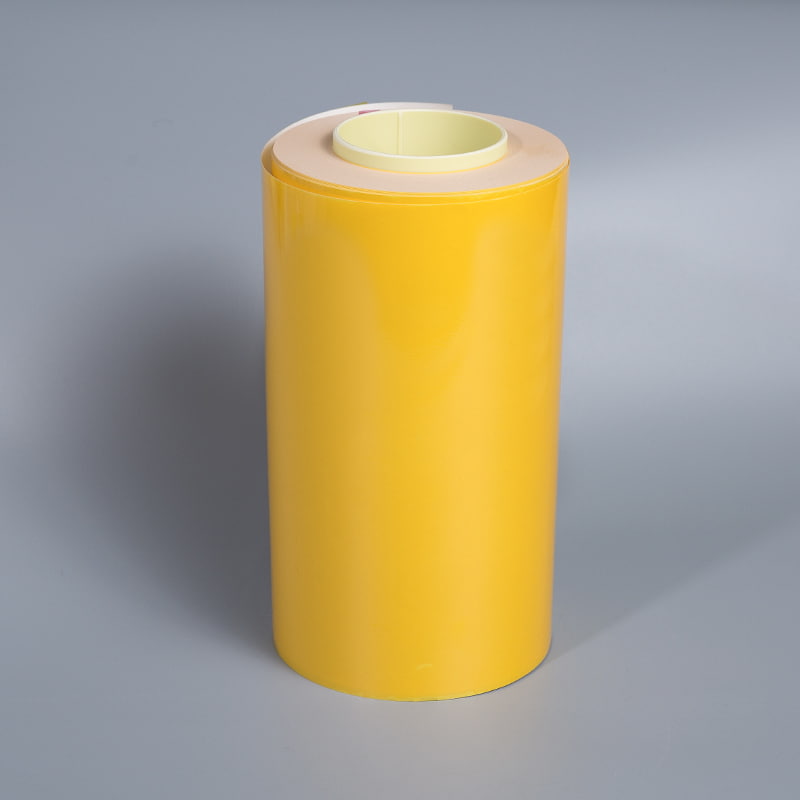
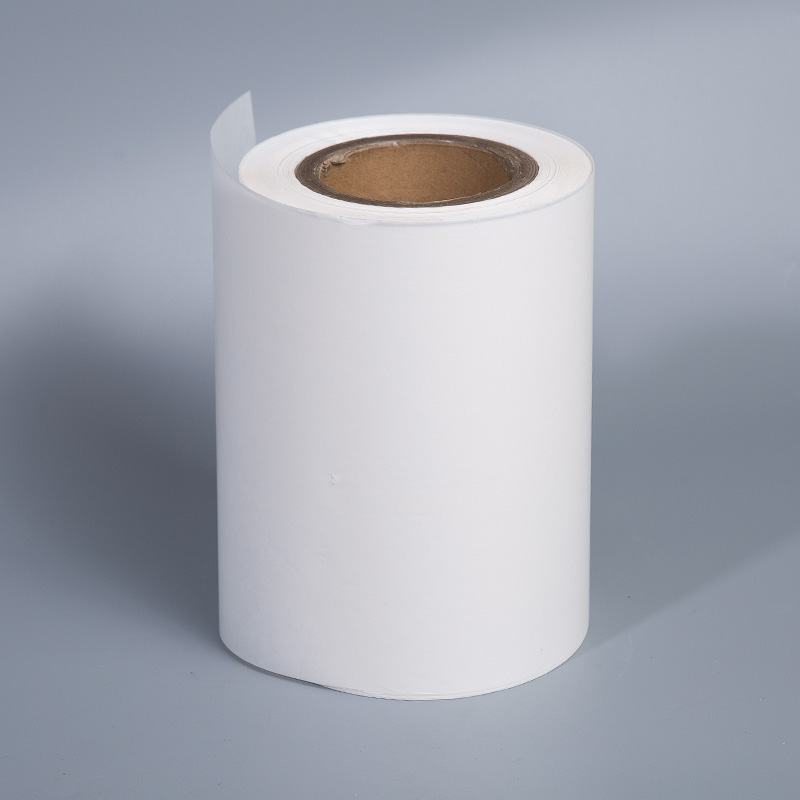 Glassine Release Paper from Anhui Hengbo with Silicone CoatingA supercalendered glassine liner with dense fiber structure and even silicone coverage, suited for label backing and tape applications where consistent release and die-cutting performance are required.View Product →
Definition
Supercalendering is a finishing process in which paper passes through alternating heated metal and fiber rolls under high pressure, increasing density, surface smoothness and gloss simultaneously.
| Attribute | Standard Kraft liner | Glassine release paper |
| Surface profile | Open fiber matrix with micro-valleys | Dense supercalendered web with near-film smoothness |
| Equilibrium moisture content | 6-9% | 4-6% |
| Release-force coefficient of variation | 10-15% | About 5% |
| Thickness variance | +/-4-5% | +/-2% |
| Relative cost per roll | Baseline | +15-25% |
The practical takeaway is that glassine gives silicone a uniform anchor, which makes release chemistry predictable. That predictability is the foundation for everything a high-volume converter is actually buying.
Why glassine release paper beats Kraft on release-force consistency
Release-force consistency is the primary measured reason converters switch from Kraft to glassine, and they switch because release force is a specification, not a preference.
On a microscopically rough liner, cured silicone thickness varies, and the peel force for a one-inch strip can swing from 12 g to 28 g inside a single roll. On a rotary press running 800,000 labels per shift, that swing causes skipped labels, curled matrix edges and intermittent adhesive transfer defects. Glassine holds the coefficient of variation of release force at about 5 percent across a finished roll; standard Kraft usually runs between 10 and 15 percent.
The stable release curve shows up in three measurable ways during conversion:
- Laminated and matrix-stripped labels separate with no adhesive transfer into the liner pocket.
- Fanfolded sheeting stacks flat without curl at the label edges.
- Automatic dispensing blades can be set once and left alone for a full shift.
The stability directly affects laminating, fanfolding and automatic dispensing. As described in the guide to maintaining consistent release force across a roll, converters who run weekly peel tests find that glassine still passes the same acceptance band after three weeks of warehouse aging. Kraft drifts upward because silicone migrates into the porous sheet over time. The dominant specification for pressure-sensitive labels is a release force of 10-25 g per 25 mm at 180 degrees peel; glassine holds that band from day one, while Kraft enters it and then walks out.
Die-cutting and matrix stripping: where Kraft compressibility costs more than glassine
Glassine holds its caliper under die-cutting anvil pressure, so kiss-cut depth stays constant across the web; Kraft compresses unevenly, and the operator is forced to compromise the cutting gap.
Rotary die-cutting runs at 100 to 200 cuts per minute and assumes a fixed liner thickness. Glassine varies in thickness by about +/-2 percent and presents a consistent cutting plane. Kraft liners vary by +/-4 to 5 percent, with thicker edges, so the setting that cuts cleanly at the thick spot overcuts at the thin spot and starts breaking the face material.
Every 0.01 mm of liner thickness variation shifts the kiss-cut plane. On Kraft that variation arrives as a wave; on glassine it arrives as a straight line.
Matrix stripping is the second failure point. After die-cutting, the waste matrix is pulled upward and away from the labels; if the liner tears, the web shifts sideways and the press stops. Glassine's cross-directional tensile strength and internal bond let the matrix fracture cleanly at the label edge. Kraft, with lower internal bond strength, tears without warning mid-roll. Each stop means lost web, re-registration time and a batch that is no longer traceable.
Moisture and caliper stability: glassine release paper versus Kraft under pressroom stress
Glassine equilibrates at a lower moisture content than Kraft, which makes it dimensionally stable in a pressroom where relative humidity swings between 40 and 70 percent during a single shift.
Paper is hygroscopic, and Kraft is more absorbent because of its bulk. An uncoated Kraft liner can change width by 0.2 to 0.4 percent across a 1,200 mm web within hours. That is several millimeters of lateral movement, which misregisters printed colors and moves die-cut positions. The dense structure of glassine slows moisture exchange and limits width change to about 0.1 percent under identical conditions.
Maximum width change for glassine versus Kraft across a 1,200 mm web when pressroom relative humidity swings 30 points during a shift.
The effect compounds on presses with UV lamps and heated drying rollers. The liner dries out during the pass, then reabsorbs moisture as the rewound roll cools, which creates internal tension shifts and edge telescoping. With an equilibrium moisture content of 4 to 6 percent, glassine simply absorbs fewer water molecules than a Kraft liner at 6 to 9 percent, so the finished roll keeps its tension profile longer.
Cost per roll versus cost per defect: how glassine release paper beats Kraft on yield
Glassine costs 15 to 25 percent more per roll, but the number that matters is cost per usable label; yield, not reel price, is what the purchasing decision sits on.
Run the math on a one-million-label job. A 1,200 mm wide, 10,000-meter Kraft liner roll costs roughly 18 percent less than the same length in glassine. If Kraft generates 1.8 percent scrap from release spikes, die-cut depth variation and matrix tears, while the glassine run generates 0.6 percent, the yield gap alone cancels the price advantage. Add one production stop caused by a mid-roll matrix tear, and glassine wins the cost calculation twice over.
Relative performance scores from 0 to 10 across running conditions typical of high-volume label converting lines.
Converters that standardize on glassine also simplify batch acceptance. Anhui Hengbo New Material Co., Ltd., the manufacturer behind the Gracin and copperplate release paper lines, provides documented release force, caliper and moisture data that can be verified against the industrial release paper roll quality benchmarks used in label plants. A Kraft supplier often cannot offer that level of traceability because the product is defined less tightly from master roll to master roll.
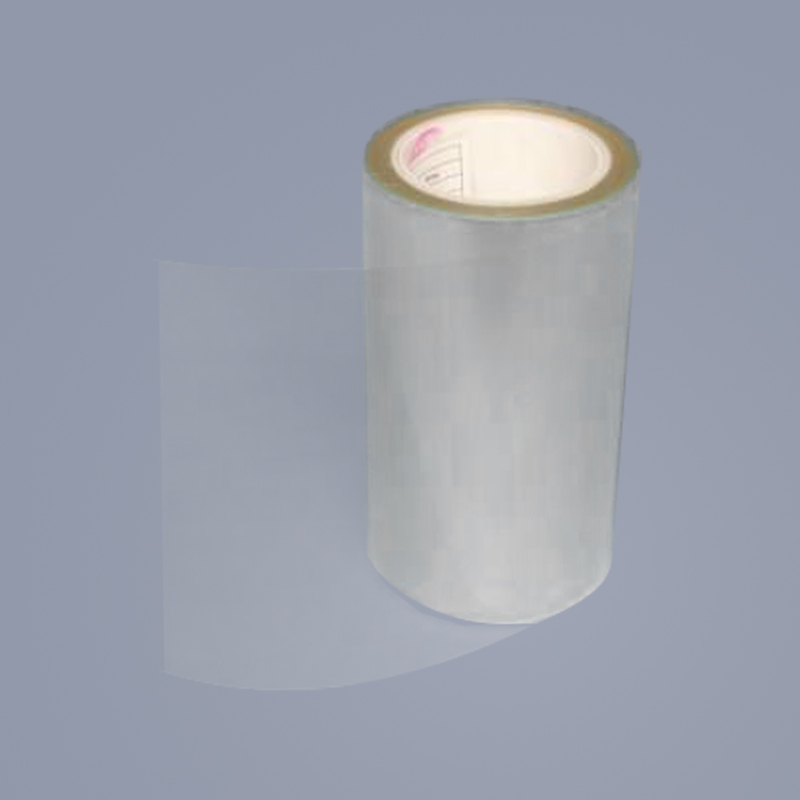 Copperplate Paper Release Paper for Printing and Specialty ApplicationsA smooth copperplate-based release liner that bridges Kraft and glassine, offering improved surface quality for thermal transfer and flexographic label printing, with single- or double-sided coating options.View Product →
For printing-oriented jobs that need a paper liner with extra surface smoothness, copperplate paper release paper is the specified upgrade between Kraft and glassine in thermal transfer and flexographic label applications.
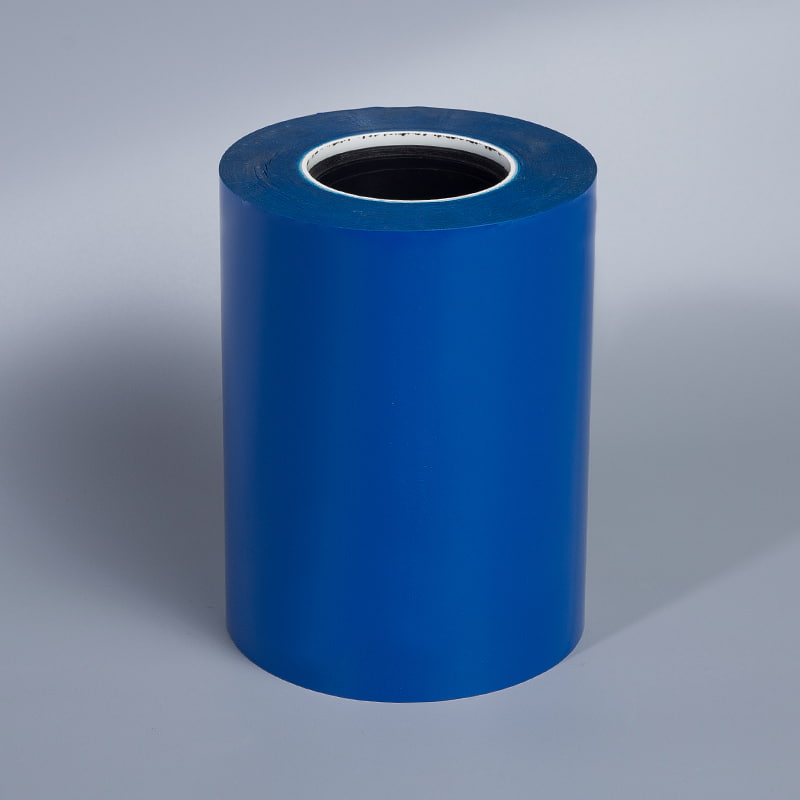 PET Release Film for High-Temperature and Transparent Labeling NeedsA polyester release film with stable silicone coating and excellent dimensional stability, ideal for applications requiring transparency or resistance to heat above 150°C, available in multiple thicknesses and surface finishes.View Product →
When the label requires transparency or must survive heat above 150 degrees Celsius, the liner of choice moves from paper to PET release film, which is measured in microns and provides even tighter dimensional stability than glassine.
The yield gap alone erases the purchase premium: 1.2 percent lower scrap on a one-million-label run repays the liner upgrade twice over.
FAQ: glassine release paper and Kraft liners in label production
Can a standard Kraft liner be coated with more silicone to match glassine release consistency?
No. Thicker silicone raises cost and changes the release curve, but it cannot compensate for the micro-roughness of the Kraft fiber surface. The uneven topography still causes localized dewetting and release-force variation. Glassine achieves consistency through substrate density, not coating thickness.
Is Kraft liner acceptable for any high-volume label work?
Yes, when the adhesive is forgiving, converting speed is moderate, and the finished label does not require tight registration or a defined peel band. That category includes simple shipping labels, low-cost retail tags and unregulated industrial stickers.
When should a converter switch from Kraft to glassine?
Switch when scrap from matrix tears, die-cut depth errors or release drift passes 1 percent, or when a customer rejects a release tolerance that Kraft cannot hold. Run a side-by-side trial on the same press with the same adhesive; the data usually closes the debate within two shifts.
Does glassine release paper always raise total production cost?
It raises liner cost, not production cost. Scrap, downtime and inspection labor fall enough on high-volume lines that the 15 to 25 percent purchase premium is repaid by yield in almost every audited pressroom.